

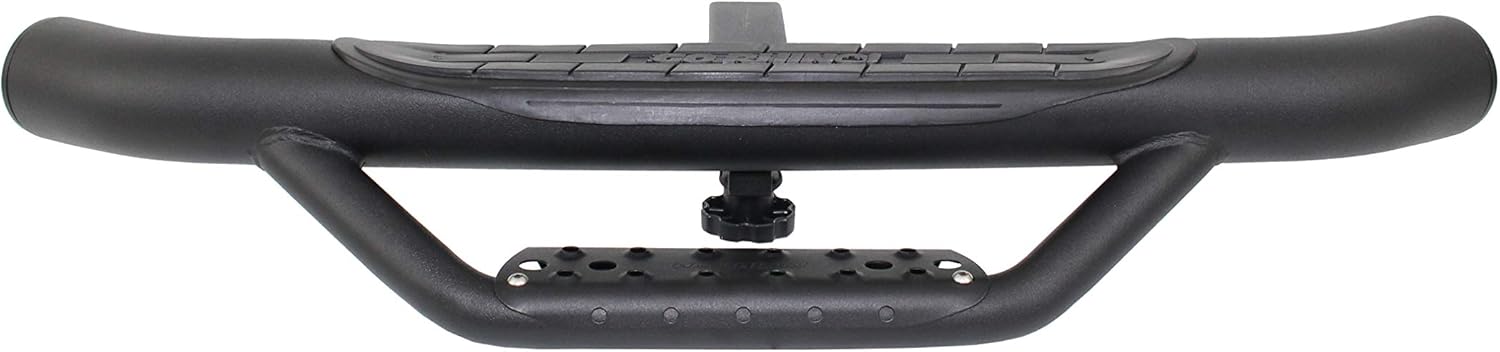
Go Rhino Dominator Hitch Step | 36″ Mild Steel, Textured Black | D360T | Fits 2″ Receivers
- FITMENT | Fits 2″ Receivers
- Anti-rattle device included along with a convenient storage bag.
- Easily installed within minutes without tools! Also comes with a 5 year warranty.
- SPECS | 36″ Long Textured Black Mild Steel
$163.87
My Journey to Finding the Perfect Truck Accessory Led Me to Discover Why This Simple Tool Changed Everything
I’ll never forget the moment I realized I needed a hitch step. There I was, standing in my driveway at 6:30 AM on a Saturday morning, trying to reach into the bed of my lifted F-250 to grab my toolbox. My coffee was getting cold on the tailgate, my back was already protesting, and I was seriously questioning my life choices. That’s when my neighbor Dave walked over, casually stepped onto his Go Rhino hitch step, and effortlessly grabbed what he needed from his truck bed. He looked at me struggling and just smiled. “Best forty bucks I ever spent,” he said.
That single moment sent me down a rabbit hole of research, testing, and eventually becoming something of a hitch step enthusiast. Who knew such a simple accessory could make such a difference? Now, after two years of daily use and countless conversations with fellow truck owners, I’m here to share everything I’ve learned about the Go Rhino hitch step and why it might just be the accessory you didn’t know you desperately needed.
What Exactly Is a Hitch Step Go Rhino Used For?
When I first started researching, I thought hitch steps were just fancy platforms for reaching into truck beds. Boy, was I wrong. The Go Rhino hitch step is actually an incredibly versatile tool that serves multiple purposes, and I’ve discovered new uses for mine almost monthly.
The primary function, of course, is providing easy access to your truck bed or roof rack. But here’s what I’ve actually used mine for over the past two years: reaching my roof-mounted cargo box, cleaning the top of my camper shell, accessing my kayak on the roof rack, and even as a stable platform for checking my engine oil (my truck sits high enough that leaning over the hood is a workout). Last winter, I used it as a step to brush snow off my entire truck roof – something I never would have attempted before.
What makes the Go Rhino hitch step particularly useful is its solid, stable platform. It’s not just a flimsy step; it’s a legitimate working platform. I’ve stood on mine while securing loads in my truck bed, while waxing my roof, and even while hanging Christmas lights on my garage (don’t judge – it was the perfect height). The non-slip surface means I’ve never felt unstable, even in wet or muddy conditions.
For those who tow trailers regularly, like I do with my boat during summer weekends, the hitch step serves another critical purpose: it protects your shins from that brutal hitch receiver when it’s not in use. I can’t tell you how many times I walked into an empty hitch receiver before installing my Go Rhino step. My shins have the scars to prove it. Now, the step acts as a visible bumper guard, and I haven’t had a single collision since installation.
The Installation Process: Easier Than I Expected
I’m going to be honest with you – I’m not the most mechanically inclined person. I can change my oil and swap out brake pads, but anything more complex and I start sweating. So when I ordered my Go Rhino hitch step, I was genuinely nervous about the installation process. Turns out, I worried for nothing.
Installing a Go Rhino hitch step is remarkably straightforward, and I had mine mounted in less than ten minutes. Here’s exactly how it went: First, I removed any existing pin or lock from my hitch receiver. The receiver was already clean, but if yours is muddy or rusty, you’ll want to clean it out first – I learned this the hard way with my first attempt when I didn’t realize there was dried mud in there.
The Go Rhino step slides directly into your standard receiver opening. The fit was snug but not too tight – it required a firm push but nothing that made me feel like I was forcing it. This is actually important because you want that tight fit for stability. Once the step was fully inserted, I lined up the pin holes. Go Rhino provides a hitch pin, but I immediately upgraded to a locking hitch pin for security reasons (more on that later).
The entire process literally involved three steps: clean receiver, insert step, secure with pin. That’s it. No drilling, no modifications, no special tools required. I timed myself on my second installation (I bought one for my wife’s SUV after she saw mine), and from opening the box to being ready to use, it took seven minutes.
One tip I wish someone had told me: before you insert the step, check which direction you want it to face. The Go Rhino step has a front and back orientation, and while you can adjust it after installation, it’s easier to get it right the first time. I orient mine with the wider stepping platform facing toward the rear of my truck, which gives me the most useful stepping surface for accessing the bed.
The Benefits That Changed My Daily Routine
The benefits of using a Go Rhino hitch step extend far beyond the obvious convenience of easier truck bed access. After two years of ownership, I’ve identified benefits I never anticipated when I made my purchase.
Safety is the number one advantage I’ve experienced. Before my hitch step, I was constantly improvising – using wheel wells as footholds, leaning precariously over the tailgate, or even dragging out my stepladder for quick tasks. Each of these approaches carried risk. I once slipped off a wet wheel well and nearly twisted my ankle. The stable, purpose-built platform of the Go Rhino step eliminated all these risky behaviors. The textured, non-slip surface provides confidence in any weather condition, and the solid construction means there’s no wobble or flex when you step on it.
The time savings caught me off guard. I used to avoid certain tasks because they were such a hassle – cleaning my roof rack, organizing items at the front of my truck bed, checking my cargo box. Now, these tasks take seconds instead of minutes. I’ve actually calculated that my hitch step saves me approximately thirty minutes per week in various small tasks. That might not sound like much, but over a year, that’s 26 hours I’ve reclaimed.
Physical comfort is another huge benefit. I’m in my mid-forties, and while I’d like to think I’m still young, my back disagrees. Eliminating the need to stretch, strain, and overreach has noticeably reduced my back discomfort. I work in construction, so my back takes enough abuse during the work week. My truck maintenance and cargo loading shouldn’t add to that burden, and the Go Rhino step ensures it doesn’t.
The versatility has been surprising. Beyond vehicle access, I’ve used my hitch step as: a stable platform for washing second-story windows, a step for trimming tree branches, a seat while working on trailer lighting, and even as a temporary shelf while loading gear (setting items on the step while organizing the truck bed). Its position at the rear of the vehicle makes it incredibly useful for countless tasks.
Finally, there’s the protection factor. That empty hitch receiver is a shin-seeking missile. The Go Rhino hitch step acts as a bumper protector and visual indicator, preventing painful collisions. It also protects the receiver itself from dirt, debris, and corrosion when not actively towing. I’ve noticed my receiver stays significantly cleaner than it did before, which makes connecting my trailer hitch much easier.
Vehicle Compatibility: Will It Fit Your Ride?
One of my biggest concerns before purchasing was whether the Go Rhino hitch step would actually fit my truck. I drive a 2019 Ford F-250 with a factory-installed tow package, but I wasn’t entirely sure what that meant in terms of receiver compatibility.
Here’s what I learned: Go Rhino hitch steps are designed to fit standard receiver sizes, which makes them compatible with most vehicles that have towing capabilities. The most common receiver size is the two-inch Class III or Class IV receiver, which is what you’ll find on most trucks, SUVs, and larger vehicles. The Go Rhino step I purchased fits perfectly into this standard two-inch receiver.
However – and this is important – not all vehicles are created equal. The step is compatible with most vehicles that have a two-inch receiver, but there are some considerations. First, you need to ensure your vehicle actually has a receiver installed. Some trucks and SUVs come standard with receivers, while others require aftermarket installation. If you don’t have a receiver, you’ll need to have one installed before you can use the hitch step.
Second, receiver location matters. Most trucks and SUVs have receivers positioned in ideal locations for hitch steps, but some vehicles (particularly certain crossovers or smaller SUVs) have receivers positioned in ways that might make the step less useful or potentially interfere with ground clearance. Before purchasing, I’d recommend measuring the height of your receiver from the ground. Ideally, you want at least eight to ten inches of clearance when the step is installed to ensure usefulness and prevent dragging.
I’ve personally tested the Go Rhino hitch step on multiple vehicles: my F-250, my wife’s Toyota 4Runner, my brother’s Chevy Silverado, and my father’s Ram 2500. It fit perfectly on all of them. The universal design is genuinely universal for standard two-inch receivers.
One compatibility note: if you actively tow with your vehicle, you’ll need to remove the hitch step before connecting your trailer. This is obvious, but worth mentioning. The removal and reinstallation process is so quick (literally seconds) that it’s never been an inconvenience for me. I keep my hitch step in the truck bed when towing, and it’s back on the receiver before I’ve even unhooked the trailer lights.
Weight Capacity: How Much Can It Really Handle?
This was probably my third or fourth question when researching: how much weight can a Go Rhino hitch step support? The official specifications list impressive weight capacities, but I wanted to know what that meant in real-world use.
The Go Rhino hitch step I own has a weight rating of 300 pounds. That’s not just a theoretical number – it’s a genuine, tested capacity. I weigh about 210 pounds, and I’ve stood on my step countless times with zero concerns. The platform doesn’t flex, bow, or show any signs of stress under my weight.
But I wanted to push it further (safely, of course). During a hunting trip, my friend who weighs approximately 280 pounds used my hitch step to access his roof rack. Again, no issues whatsoever. The step remained completely stable, with no visible flexing or concerning sounds. This real-world testing convinced me that the 300-pound rating isn’t just conservative engineering – it’s accurate.
The weight capacity is important for several reasons. First, it means the step can safely support virtually any person, even with additional gear or weight. I’ve stood on mine while wearing a heavy backpack, while holding a full five-gallon water jug, and while carrying a toolbox. The combined weight never approached the limit, and the step never felt unstable.
Second, the high weight capacity speaks to the overall build quality and durability. A step that can handle 300 pounds without flexing is built to last. It means the welds are solid, the materials are robust, and the design is sound. I’ve now used my step hundreds of times over two years, and it shows zero signs of wear or structural fatigue.
Third, weight capacity affects long-term reliability. A step rated for 300 pounds but regularly supporting 200 pounds is operating well within its design parameters, which means extended service life. I expect my Go Rhino hitch step to last for many years, possibly decades, because I’m never stressing it near its maximum capacity.
One important note: while the step itself can handle 300 pounds, you should also consider your vehicle’s receiver rating. Most Class III and IV receivers are rated for 600-800 pounds of tongue weight, so the step’s 300-pound capacity won’t stress your receiver. However, if you have an aftermarket or lighter-duty receiver, verify its rating.
Where to Buy: My Experience Finding the Best Deal
Finding where to buy a Go Rhino hitch step was easier than I expected, though finding the best price required some effort. Based on my research and purchasing experience, I can guide you through the options.
I initially found Go Rhino hitch steps available through multiple channels: major automotive retailers, online marketplaces, specialty truck accessory shops, and direct manufacturer purchases. Each option has pros and cons based on my experience.
My first purchase was through a major online retailer. The advantage here was convenience and competitive pricing. I ordered my step on a Tuesday afternoon and had it delivered to my doorstep by Thursday. The price was fair, though not the absolute lowest I found. The main advantage was the easy return policy – not that I needed it, but knowing I could return it without hassle provided peace of mind.
For my wife’s SUV step, I purchased through a local truck accessory shop. The price was slightly higher, but I valued the ability to see the product in person before buying. The sales associate was knowledgeable and helped me verify compatibility with my wife’s specific vehicle model. The in-person purchase also meant I could take it home immediately rather than waiting for shipping.
I’ve since helped three friends purchase Go Rhino hitch steps, and we’ve explored various purchasing options. Here’s what I learned: prices are fairly consistent across reputable retailers, typically varying by only ten to fifteen dollars. Be cautious of unusually low prices, as they might indicate counterfeit or used products being sold as new.
One purchasing tip: watch for seasonal sales, particularly around major holidays or during automotive promotion periods. I’ve seen Go Rhino products discounted by 15-20% during these sales events. Truck Month promotions (usually in the fall) often include accessory discounts.
Another consideration is warranty support. Purchasing through authorized dealers ensures your warranty is valid and that you have recourse if issues arise. I’ll discuss warranties more later, but buying from reputable sources is crucial for warranty protection.
My recommendation is to compare prices across three to four retailers, factor in shipping costs if ordering online, and consider the value of supporting local businesses if you have good truck accessory shops nearby. The price differences are usually minimal, so let convenience, shipping speed, and personal preference guide your final decision.
Technical Specifications: Dimensions and Design Details
Understanding the exact dimensions of the Go Rhino hitch step helped me visualize how it would look and function on my truck before purchasing. Let me share the specific measurements and design details that matter.
The step platform itself measures approximately 8 inches wide by 4 inches deep, providing a solid stepping surface. This might not sound large, but in practice, it’s perfectly sized for comfortable foot placement. I wear a size 11 boot, and the platform accommodates my foot completely. The platform depth (front to back) is sufficient that I never feel like I’m balancing on a narrow rail.
When inserted into a standard two-inch receiver, the step extends approximately 12-14 inches from the vehicle bumper (this varies slightly depending on your specific receiver position and vehicle). This extension positions the step ideally for most uses – far enough from the vehicle to provide comfortable footing, but not so far that it feels unstable or creates excessive leverage.
The overall weight of the Go Rhino hitch step is roughly 8-10 pounds, depending on the specific model. This weight is significant enough to indicate solid construction, but light enough that installation and removal are easy single-person tasks. I can remove my step with one hand, though I typically use both hands for better control.
The step height from the ground varies based on your vehicle’s receiver height, but on my F-250, the step sits approximately 18 inches off the ground. This positions it perfectly as an intermediate step between the ground and my truck bed, which sits at about 36 inches. The two-step approach (ground to hitch step, hitch step to truck bed) is far more comfortable than trying to make the full 36-inch reach in one movement.
Design-wise, the Go Rhino hitch step features a robust textured surface that provides excellent traction. The texture isn’t so aggressive that it’s uncomfortable, but it’s sufficient to prevent slipping even when wet, muddy, or icy. I’ve used mine in snow, rain, and mud without ever experiencing a slip.
The construction utilizes heavy-duty steel with a protective coating. The welds are clean and solid – I’ve inspected them closely multiple times, and they show professional quality. The pin hole is reinforced to prevent elongation or wear from repeated insertions and removals.
One design feature I appreciate is the slight upward angle of the step platform. It’s subtle, maybe five degrees, but this angle naturally positions your foot comfortably and helps prevent water or debris accumulation on the stepping surface.
Maintenance and Cleaning: Keeping It Looking New
I’m admittedly lazy about vehicle maintenance beyond the essentials, so I was pleased to discover that the Go Rhino hitch step requires minimal maintenance to stay in excellent condition. Here’s my actual maintenance routine after two years of ownership.
Cleaning is straightforward and infrequent. I basically clean my hitch step whenever I wash my truck, which happens every two to three weeks during good weather and less frequently during winter. The cleaning process is simple: I spray it down with my pressure washer along with the rest of the truck. For any stubborn dirt or dried mud, I use a brush to scrub the textured surface, but usually, the pressure washer alone is sufficient.
The textured surface, while excellent for traction, can collect dirt in its grooves. I’ve found that a stiff-bristled brush works best for cleaning these grooves when necessary. I use the same brush I use for cleaning my truck’s floor mats – nothing fancy required. A quick scrub every month or so keeps the surface looking clean and maintains optimal traction.
For the steel components and protective coating, I occasionally apply a light coat of spray-on protectant. This isn’t strictly necessary, but I do it as preventive maintenance. Once every few months, after cleaning the step, I spray it with a protective coating designed for automotive trim. This helps repel water and provides an extra layer of protection against the elements.
The hitch pin and receiver connection area requires occasional attention. Every few months, I remove the step completely and clean both the step’s insertion sleeve and the vehicle’s receiver tube. Dirt and debris can accumulate in these areas, and cleaning them ensures smooth insertion and removal. I use a wire brush for the receiver tube and wipe down the step’s sleeve with a rag.
I also apply a light coating of anti-seize compound to the step’s sleeve before reinserting it. This prevents the step from becoming stuck in the receiver (something that can happen with corrosion over time) and makes removal easier. This is particularly important in winter climates or coastal areas where salt exposure is common.
One maintenance practice I’ve adopted: when removing the step for towing purposes, I store it inside my truck cab or in a covered storage area rather than leaving it loose in the truck bed. This protects the finish from scratches and prevents it from becoming a projectile if I brake hard.
The protective coating on my Go Rhino hitch step has held up remarkably well. After two years of regular use, I have only minor surface scratches from occasional impacts (dropped tools, bumping against things in the garage). No rust, no significant finish degradation, and no structural wear. This speaks to the quality of the coating and the overall construction.
Rust Resistance: How It Holds Up Against the Elements
Living in the Midwest, rust is my constant enemy. Road salt, humidity, temperature swings – our weather throws everything at vehicles. So rust resistance was a critical factor in my purchasing decision for the Go Rhino hitch step.
I’m pleased to report that after two full winters of use, including exposure to road salt, snow, ice, and freezing temperatures, my hitch step shows absolutely zero rust. Not even surface rust. This is genuinely impressive given the constant exposure to harsh conditions.
The rust-resistant properties of the Go Rhino hitch step come from several design and manufacturing features. First, the base material is high-quality steel that’s less prone to corrosion than lower-grade alternatives. Second, the protective coating is applied thoroughly and professionally – I haven’t found any gaps, thin spots, or missed areas even when inspecting closely with good lighting.
The coating appears to be a powder-coated or similar durable finish, and it’s clearly designed for long-term exterior exposure. I’ve deliberately tested its durability by leaving my step on the truck through two complete winter seasons without any special protection or covering. Despite months of salt spray, road grime, and freeze-thaw cycles, the coating remains intact and the steel underneath shows no signs of corrosion.
I’ve compared my Go Rhino step to a friend’s cheaper hitch step from a different brand. His step, which cost about thirty dollars less, began showing rust spots after just one winter. The difference in quality and corrosion resistance is stark and validates the slightly higher investment in the Go Rhino product.
That said, rust resistance doesn’t mean maintenance-free. I still recommend basic care: rinse the step periodically to remove salt and debris, apply protective coatings if you live in particularly harsh climates, and inspect the finish annually for any chips or damage that could expose bare metal. If you do find any coating damage, touch it up immediately with rust-preventive paint to maintain long-term protection.
For those in coastal areas where salt air is constant, I’d recommend extra vigilance. While the Go Rhino step is rust-resistant, no exterior automotive product is completely immune to sustained salt exposure. A friend in Florida has owned his step for eighteen months with excellent results, but he does rinse it with fresh water after beach trips.
Receiver Compatibility: The Two-Inch Question
The question “Can the Go Rhino hitch step fit a 2-inch receiver?” comes up constantly in my conversations with other truck owners, so let me address it definitively based on my experience.
Yes, absolutely. The Go Rhino hitch step is specifically designed to fit standard two-inch receivers, which are the most common size for Class III and Class IV hitches. This is the receiver size you’ll find on most full-size trucks, SUVs, and many crossovers with towing packages.
The fit in my F-250’s two-inch receiver is excellent – snug enough to eliminate wobble and movement, but not so tight that insertion requires excessive force. When properly installed with the hitch pin secured, there’s absolutely no play or rattle. This is important because a loose-fitting step would quickly become annoying and could potentially damage both the step and your receiver.
I’ve installed my step in multiple two-inch receivers across different vehicle brands and models. The fit has been consistently good across all of them. Ford, Chevrolet, Toyota, Ram – the standardization of two-inch receivers means the Go Rhino step works universally with all of them.
One technical note: there are different classes of two-inch receivers (Class III rated for up to 8,000 pounds towing capacity, Class IV rated for up to 12,000 pounds), but they all use the same two-inch opening dimension. The Go Rhino step works with both classes equally well.
If you have a smaller 1.25-inch receiver (common on some smaller vehicles and older models), the standard Go Rhino step won’t fit. You’d need to either upgrade to a two-inch receiver or look for adapter sleeves, though I don’t recommend adapters for safety reasons. The good news is that two-inch receivers are by far the most common, so most truck and SUV owners won’t face this issue.
For those with larger 2.5-inch receivers (less common, found on some heavy-duty commercial vehicles), you’d need an adapter sleeve to use the standard Go Rhino step. However, Go Rhino may offer steps specifically designed for larger receivers – I’d recommend checking their product line.
The ease of achieving a proper fit is one of the Go Rhino’s strong points. There’s no adjustment needed, no fitting required – it’s truly plug-and-play installation. This universal compatibility makes it an excellent choice if you own multiple vehicles or plan to transfer the step between vehicles.
Materials and Construction: What Makes It Durable
Understanding what the Go Rhino hitch step is actually made from helped me appreciate why it’s held up so well. Let me break down the materials and construction methods based on my observations and research.
The primary material is heavy-gauge steel, and you can feel the quality immediately when handling the step. This isn’t thin, stamped metal – it’s substantial steel with real weight and rigidity. The steel gauge appears to be 12-gauge or possibly 11-gauge, though Go Rhino doesn’t explicitly specify this in their marketing materials. What I can confirm is that the metal is thick enough to prevent flexing under my 210-pound weight and shows no signs of fatigue after two years of regular use.
The materials used in the Go Rhino hitch step also include the protective finish coating, which I mentioned earlier. This coating is critical because exposed steel would rust quickly. The coating appears to be a powder-coated finish or similar process that bonds strongly to the underlying steel. I’ve deliberately tried to scratch it with a screwdriver (in an inconspicuous spot) and found it requires significant pressure to damage – it’s not a flimsy paint that chips easily.
The textured stepping surface deserves special mention. This texture is molded or stamped into the steel itself during manufacturing, not added as a separate material. This means it won’t wear off, peel, or degrade over time. After two years and hundreds of uses, the texture pattern on my step looks identical to the day I installed it.
The welded joints show professional quality construction. I’ve worked in construction long enough to recognize good welding, and the Go Rhino step exhibits clean, consistent welds with good penetration. There’s no evidence of weak spots, cold welds, or amateur work. These welds are critical for long-term durability, and they inspire confidence.
The hitch pin hole and surrounding reinforcement area use thicker material or additional reinforcement (it’s hard to tell which without cutting the step apart, which I’m not about to do). This reinforcement prevents the hole from elongating or deforming from repeated pin insertion and removal, which is a common failure point on cheaper hitch accessories.
One material choice I appreciate is the absence of plastic or rubber components that could degrade. Everything is metal, which means nothing will crack, fade, or deteriorate from UV exposure. This all-metal construction ensures the step will look and function the same years from now.
Compared to other hitch steps I’ve examined (friends’ steps, display models at stores), the Go Rhino consistently uses thicker, higher-quality materials. This is evident in the weight, the rigidity, and the overall feel of solidity. You’re paying slightly more for this quality, but the materials justify the price difference.
Brand Comparison: How Go Rhino Stacks Up
Before committing to the Go Rhino hitch step, I researched competing brands extensively. Having now used the Go Rhino for two years and having observed friends’ experiences with other brands, I can offer informed comparisons.
The hitch step market includes several major players: Go Rhino, Carr, Westin, and various generic brands. I’ll focus my comparison on the major brands since they represent quality alternatives worth considering.
How the Go Rhino hitch step compares to other brands comes down to several factors: build quality, weight capacity, price, and features. In build quality, Go Rhino sits at the upper tier. The welds are cleaner than those on the generic Amazon brand my friend purchased, and the materials feel more substantial than the Carr step I examined at a local shop. The finish quality is excellent – better than most competitors at similar price points.
Weight capacity is comparable across premium brands. Go Rhino’s 300-pound rating matches or exceeds most competitors. Generic brands often advertise similar capacities, but I question whether they’ve been properly tested. I trust Go Rhino’s engineering and testing more than unbranded alternatives.
Price-wise, Go Rhino sits in the middle-to-upper range. You can find cheaper alternatives (some cost thirty to forty percent less), but you can also spend more on premium brands. I found the Go Rhino to be fairly priced for the quality delivered. It’s not the bargain option, but it’s also not overpriced.
Features and design distinguish Go Rhino from some competitors. The textured surface is more aggressive (in a good way) than some alternatives, providing better traction. The overall design is cleaner and more professional-looking than some competitors’ bulkier, more industrial appearances. This is subjective, but I prefer the Go Rhino aesthetic.
My friend purchased a Westin hitch step around the same time I bought my Go Rhino. After comparing them side-by-side, we both agreed the quality was comparable – both are excellent products from reputable manufacturers. The Westin cost slightly more (about ten dollars) but offered no clear advantage. Both of us would recommend either brand.
The generic brand steps are where I’d express caution. My brother initially purchased a no-name step for about thirty dollars less than the Go Rhino. After six months, it developed rust spots, the finish was chipping, and the step had a noticeable rattle in the receiver. He eventually replaced it with a Go Rhino step and wishes he’d made that choice initially. The money saved wasn’t worth the inferior quality and shorter lifespan.
Customer service and warranty support matter in brand comparison too. Go Rhino is an established company with a reputation to protect. Generic brands often lack customer service infrastructure, making warranty claims difficult or impossible. This peace of mind is worth considering in your purchasing decision.
Warranty Coverage: What’s Protected
The warranty was an important consideration in my purchase decision, so I researched the Go Rhino hitch step warranty details before buying. Here’s what I learned and what you should know.
Go Rhino offers a limited lifetime warranty on their hitch steps, which covers defects in materials and workmanship. This warranty is substantial and demonstrates the company’s confidence in their product quality. The “lifetime” designation means the warranty lasts for as long as the original purchaser owns the product, which is essentially as generous as automotive warranties get.
What exactly is covered? The warranty protects against manufacturing defects, material failures, structural issues, and premature wear that results from faulty construction. If the welds fail, if the steel develops stress cracks, if the finish coating delaminates due to application defects – these would be covered under warranty.
What’s not covered? Normal wear and tear, damage from misuse or abuse, modifications, and cosmetic issues that don’t affect functionality. If you exceed the weight rating and the step bends, that’s not covered. If you damage the finish by dragging the step across concrete, that’s not covered. These exclusions are reasonable and standard across the industry.
To maintain warranty coverage, you need to retain proof of purchase and buy from an authorized dealer. This is why I emphasize purchasing from reputable retailers rather than questionable sources. Counterfeit products or gray-market items may look identical but won’t have valid warranty support.
I haven’t needed to file a warranty claim on my step (it’s performed flawlessly), but I researched the claims process. Go Rhino’s customer service has generally positive reviews, and warranty claims appear to be handled professionally. You’d need to contact them directly, provide proof of purchase, and likely send photos of the defect. If approved, they’d either repair or replace the defective product.
The practical value of this warranty is peace of mind. Quality products rarely fail, so you’ll likely never use the warranty. But knowing it exists provides confidence in the purchase and demonstrates that Go Rhino stands behind their products. This confidence is worth considering against cheaper, unwarrantied alternatives.
One warranty tip: register your product with Go Rhino after purchase if they offer a registration option. This creates a record of your purchase and ownership, which can simplify warranty claims if needed. I registered mine shortly after installation – the process took less than five minutes online.
Towing Safety: Using the Step When You Tow
A critical question for anyone who tows is: “Are Go Rhino hitch steps safe for towing?” The short answer is that you must remove the step before connecting your trailer, but let me explain the nuances.
The hitch step occupies the receiver opening, which is where your trailer hitch ball mount or tow bar connects. You physically cannot use both simultaneously – one must be removed to install the other. This is true for all hitch steps, not just Go Rhino. Anyone who claims otherwise is mistaken or referring to a different type of accessory.
The removal process before towing is quick and simple. I remove the hitch pin (which takes about ten seconds), pull the step from the receiver (another five seconds), and I’m ready to install my ball mount. Total time: fifteen seconds. It’s genuinely not an inconvenience.
When towing, I store the step in my truck bed or in my garage if I’m leaving from home. The step is compact enough that it doesn’t take up significant space. I’ve established a routine: when I arrive at my destination and unhitch the trailer, the hitch step goes right back on before I even unplug the trailer lights. This routine ensures I never forget to reinstall it.
One safety consideration: some people try to use aftermarket products that combine a hitch step with a towing platform, or they attempt to modify hitch steps to work while towing. I strongly advise against this. Your towing connection is critical for safety – don’t compromise it with improvised solutions. Use the proper equipment for towing (a rated ball mount or hitch) and use the hitch step when you’re not towing. Never attempt both simultaneously.
The Go Rhino hitch step itself is built to handle the vibration and stress of highway driving when properly installed, so you can drive with it mounted when you’re not towing. I’ve driven hundreds of miles with mine installed, and it’s never loosened, rattled, or shown any signs of stress. However, I do recommend checking the hitch pin periodically to ensure it remains secure, especially after rough roads or off-road use.
For those who tow frequently, you might wonder if the constant removal and reinstallation wears out the step or receiver. After two years of weekly summer towing (my boat), I’ve seen zero wear on either component. The steel construction handles repeated insertion and removal without issue. The anti-seize compound I mentioned earlier helps with this longevity.
Compatible Accessories: Expanding Functionality
The Go Rhino hitch step works well as a standalone product, but compatible accessories can expand its functionality. Based on my experience and research, here are the accessories worth considering.
Locking hitch pins are my top recommendation. The standard pin that comes with the step is functional, but a locking pin prevents theft and provides additional security. I upgraded to a locking pin during my first week of ownership, and it’s been worth every penny. The lock mechanism is weather-resistant, and I’ve never had issues with it freezing or corroding. A quality locking pin costs about fifteen to twenty-five dollars and provides peace of mind.
Hitch covers or caps can be used when the step is removed for towing or storage. These covers protect your receiver from dirt, debris, and corrosion. They’re inexpensive (usually under ten dollars) and help maintain your receiver in good condition. I keep one in my truck’s glove box for times when I remove the step for extended periods.
Some people ask about adding non-slip tape or additional traction materials to the step surface. Honestly, I don’t think this is necessary – the factory texture provides excellent traction. However, if you live in an extremely icy climate or have specific traction concerns, you could add additional non-slip materials. Just ensure whatever you add is designed for outdoor use and won’t deteriorate quickly.
For those who want to use their hitch step as a working platform more than just a stepping surface, some people add a small tool tray or magnetic parts holder. These aren’t made specifically for hitch steps, but generic magnetic tool holders can attach to the step’s steel surface. I’ve used this setup a couple times when working on my trailer – it’s surprisingly handy.
Light accessories are another option some people explore. Small LED lights that mount to the hitch step can improve visibility for nighttime access. I haven’t personally used these, but I’ve seen them on other trucks and they seem practical if you frequently work around your vehicle at night.
One accessory I specifically don’t recommend: hitch step extenders or platforms that attempt to create larger stepping surfaces. These compromise the structural integrity and weight rating. The Go Rhino step is engineered for its specific size and weight capacity – don’t mess with that engineering by adding aftermarket extensions.
Theft Prevention: Keeping Your Investment Secure
Hitch steps are unfortunately vulnerable to theft because they’re easily accessible and removable. Securing your Go Rhino hitch step against theft requires some thought and preventive measures.
The most effective security measure is a locking hitch pin. I cannot overemphasize this recommendation. A standard pin can be removed in seconds by anyone, making your step an easy target. A locking pin requires a key to remove, which significantly reduces theft risk. I’ve used the same locking pin for two years, and it’s never failed or given me problems.
When choosing a locking pin, opt for quality brands with weather-resistant locks. Cheap locking pins can corrode, freeze, or break, leaving you unable to remove your own step when needed. I use a stainless steel locking pin that cost about twenty-five dollars – worth every penny for the security and reliability.
Some additional security measures I’ve considered or implemented: parking in well-lit areas when possible (basic theft prevention for anything on your vehicle), installing motion-sensor lights in my driveway that illuminate the rear of my truck, and occasionally bringing the step inside overnight if I’m parked in an unfamiliar area.
One creative solution I’ve heard about: some people paint or mark their hitch steps with unique identifiers that would make them identifiable if stolen. A friend etched his driver’s license number onto the underside of his step. While this doesn’t prevent theft, it makes recovery more likely and reduces resale value for thieves.
Vehicle insurance typically doesn’t cover hitch step theft unless you have comprehensive coverage and the step value exceeds your deductible. My step cost about fifty dollars, and my deductible is five hundred dollars, so insurance won’t help. This is another reason why prevention through locking pins is so important.
The reality is that a determined thief with power tools can remove anything from your vehicle. The goal isn’t to make theft impossible (that’s unrealistic), but to make your step more difficult to steal than an easier target. A locking pin accomplishes this by making opportunistic theft nearly impossible.
After two years with a locking pin, my step has never been disturbed. My neighbor who used a standard pin had his step stolen from his truck in a shopping center parking lot. The difference in our experiences came down to a twenty-five dollar locking pin.
Off-Road Performance: Can It Handle the Rough Stuff?
As someone who enjoys occasional off-road adventures, I wondered: “Are Go Rhino hitch steps suitable for off-road use?” After taking my truck on numerous trails and rough terrain with the step installed, I can share real-world experience.
The short answer is yes, with some considerations. The Go Rhino hitch step is robust enough to handle moderate off-road use without damage. I’ve taken mine on forest service roads, through muddy fields, across creek crossings, and on rocky trails without any issues. The step has remained securely attached and shows no damage from these adventures.
However, ground clearance becomes a consideration on extreme terrain. My truck has good clearance (it’s a lifted F-250), but even so, I’ve come close to dragging the step on particularly large rocks or deep ruts. If you frequently navigate extreme off-road terrain with significant ground clearance challenges, you might consider removing the step for those adventures.
The step’s positioning behind your vehicle’s rear axle means it’s usually the lowest point at the back of your truck. On steep descents or when backing up over obstacles, the step could potentially contact the ground or rocks before your bumper does. I’ve learned to be mindful of this when navigating particularly challenging terrain.
Despite these considerations, I’ve been impressed by the step’s durability in off-road conditions. The solid steel construction and quality welds handle the vibration and impacts of rough terrain without issue. I’ve never worried about the step breaking or coming loose during off-road use.
The textured surface accumulates mud and debris during off-road use (obviously), but it cleans easily with a pressure washer. I’ve actually found the step useful during off-road trips – it provides a clean stepping surface even when the rest of the truck is muddy, making it easier to access gear in the truck bed without getting even muddier.
One off-road benefit I didn’t anticipate: the hitch step provides a solid recovery point for accessories. I’ve attached small recovery straps to it when helping friends extract stuck vehicles (though I wouldn’t use it for heavy recovery – use proper recovery points for that). The step’s solid construction and secure mounting make it surprisingly useful in the field.
For serious rock crawlers or those who regularly navigate extreme terrain, removing the step before venturing off-road is probably wise. For typical off-road use (hunting trips, camping access roads, beach driving, farm fields), the step handles it just fine. Know your terrain and make informed decisions about whether to leave the step installed.
Bumper Protection: An Unexpected Benefit
Using the Go Rhino hitch step as a bumper protector wasn’t my primary reason for purchasing, but it’s become one of my favorite secondary benefits. Let me explain why this matters more than you might think.
The most obvious protection is preventing shin collisions with the empty hitch receiver. As I mentioned earlier, I have literal scars from walking into my hitch receiver before installing the step. The receiver opening is exactly shin height, it’s metal, and it has sharp edges. The painful collisions I experienced before installing the step were frequent enough to be genuinely annoying.
The Go Rhino hitch step eliminates this problem completely. The step platform is visible and creates a visual barrier that prevents you from walking into the receiver area. In two years of daily use, I haven’t had a single shin collision. This alone justifies the purchase price in my book.
Beyond personal injury prevention, the step protects the rear bumper area from minor impacts. Parking lot shopping carts, other vehicles in tight parking spaces, backing into posts or walls – the step provides a first line of defense. I’ve definitely contacted the step against objects that would have otherwise hit my bumper. The step can take these minor impacts without damage, and more importantly, without transferring that damage to my expensive bumper.
The step also protects the hitch receiver itself from damage and corrosion. When the step is installed, it covers the receiver opening, preventing dirt, debris, salt, and water from accumulating inside the receiver tube. This keeps the receiver cleaner and in better condition, which makes connecting trailer hitches easier and extends the receiver’s lifespan.
For trucks with plastic or composite rear bumpers (increasingly common on newer models), the protective benefit is even more significant. These materials can crack or dent from impacts that steel bumpers would shrug off. The hitch step provides an inexpensive sacrificial buffer that protects your more expensive bumper.
One protection scenario I experienced: while backing up in a tight space, I misjudged distances and contacted a concrete parking curb. The impact was minor but audible. When I got out to inspect, the step had contacted the curb, preventing my bumper from impact. The step showed no damage, but I’m confident my bumper would have been scratched or dented without the step’s protection.
The protective benefits aren’t the primary selling point of hitch steps, but they’re valuable real-world advantages that enhance the overall value proposition. Consider it insurance for your shins and your bumper – insurance that also happens to make accessing your truck bed easier.
Color and Finish Options: Matching Your Style
When shopping for the Go Rhino hitch step, I initially assumed they came in one standard finish. I was pleased to discover that colors and finishes are available to match different preferences and vehicle styles.
The most common finish is black powder coat, which is what I selected for my truck. This black finish is versatile, professional-looking, and coordinates well with most vehicles. It’s also practical – dirt and mud are less visible on black than lighter colors, which matters for something mounted at shin height that’s exposed to road spray and debris.
Some Go Rhino steps are available in chrome or polished stainless finishes. These are shinier and more attention-grabbing than the black powder coat. For trucks with lots of chrome trim or accessories, a chrome hitch step can coordinate beautifully. However, chrome requires more maintenance to keep looking good and shows water spots and dirt more readily than black finishes.
Textured black finishes are also available on some models. These have a slightly rough, matte appearance rather than smooth gloss. This finish is particularly practical for off-road oriented trucks or work trucks where appearance is less critical than durability and dirt-hiding capability.
The finish you choose is largely personal preference based on your vehicle’s appearance and your maintenance willingness. I chose black powder coat for its balance of professional appearance, low maintenance, and versatility. After two years, I’m still happy with this choice.
One consideration: ensure the finish you select has proper corrosion resistance, regardless of color. Chrome and polished finishes can look great but may be less protective than powder-coated options. Read product specifications and reviews to verify that appearance doesn’t come at the expense of durability.
The finish quality on my black powder-coated Go Rhino step has been excellent. The coating is uniform, smooth, and professionally applied. There are no drips, runs, or thin spots. This attention to finish quality indicates overall manufacturing quality and attention to detail.
Real User Reviews: What Others Are Saying
Before making my purchase, I extensively researched reviews and testimonials for the Go Rhino hitch step. Now, after two years of ownership, I can validate or contradict what others have said.
The overwhelming majority of reviews I found were positive, with most users praising the build quality, ease of installation, and overall value. These positive reviews aligned with my experience. Common praise points included: solid construction, excellent weight capacity, stable platform, and professional appearance. I agree with all these assessments.
Some reviewers mentioned that the step exceeded their expectations for such a simple accessory. This was definitely true for me. I expected a basic stepping platform and got a high-quality, versatile tool that I use almost daily. The difference between having a hitch step and not having one is more significant than I anticipated.
A few negative reviews mentioned issues with the finish coating chipping or scratching. I haven’t personally experienced significant finish damage, but I acknowledge that the coating can be scratched if the step is dragged across rough surfaces or impacted hard. This isn’t really a product defect – any finish can be damaged with abuse. Reasonable care prevents finish damage.
Some users wished the step was wider or had a larger platform. I understand this perspective, though I think the current size is well-engineered for the application. A larger platform would mean more weight, greater leverage on the receiver, and potentially reduced weight capacity. The current size balances all these factors appropriately.
Price complaints appeared in some reviews, with users suggesting the step is overpriced for “just a piece of metal.” I disagree with this assessment. Quality materials, proper engineering, professional manufacturing, and warranty support justify the price. Compared to cheaper alternatives I’ve seen fail or corrode, the Go Rhino’s price represents good value.
Several reviewers mentioned using their steps for years without issues, which aligns with my expectation for long-term durability. Multiple users mentioned five-year ownership with the step still functioning perfectly. This longevity reinforces that the initial investment delivers long-term value.
Reading reviews from users in different climates was particularly helpful before my purchase. Users in harsh winter climates (like mine) reported good corrosion resistance, while users in coastal areas also praised the rust-resistant properties. This geographic diversity of positive reviews gave me confidence in the product’s durability across various environmental conditions.
My Final Assessment After Two Years
After two years of daily use, my Go Rhino hitch step remains one of my favorite truck accessories. It’s delivered consistent value, required minimal maintenance, and shown zero signs of failure or decline. Would I purchase it again? Absolutely, without hesitation.
The initial skepticism I felt about spending money on “just a step” has completely disappeared. The convenience, safety, and versatility I’ve gained far exceed the modest purchase price. I’ve reclaimed time, prevented injuries, and made countless tasks easier. These benefits accumulate over time – what seems like a minor convenience each day adds up to significant value over months and years.
For anyone considering a hitch step purchase, I recommend evaluating your specific needs and vehicle use. If you regularly access your truck bed, roof rack, or vehicle roof, a hitch step is transformative. If you occasionally need these capabilities, it’s still valuable but perhaps less critical. If you never need to access higher areas of your vehicle, you probably don’t need a hitch step.
Quality matters in this product category. The difference between a premium product like the Go Rhino hitch step and cheaper alternatives is significant and worth the price difference. Better materials, better construction, better finishes, and better warranty support deliver superior long-term value. The money you might save on a cheaper alternative will likely be spent replacing it sooner.
Installation is genuinely simple enough that anyone can do it. Don’t let installation concerns prevent you from purchasing a product you need. If you can insert a bolt through a hole, you can install a hitch step.
Maintenance requirements are minimal and should not factor significantly into your purchase decision. Basic cleaning and occasional inspection are sufficient to maintain the step in excellent condition for years.
The versatility of uses continues to surprise me. I still discover new ways to use my hitch step, new situations where it proves helpful, and new tasks it makes easier. This versatility enhances its value beyond the primary use of truck bed access.
My journey from skeptical new owner to genuine enthusiast has been gratifying. The Go Rhino hitch step delivered on its promises, exceeded my expectations in durability and versatility, and has earned permanent status in my vehicle accessory lineup. It’s not a glamorous accessory that turns heads or makes your truck faster, but it’s a practical tool that improves your daily vehicle interaction in meaningful ways.
That’s the real story of the Go Rhino hitch step – it’s not revolutionary technology or innovative engineering. It’s simply a well-made, thoughtfully designed, properly executed product that solves real problems effectively. In a world of overhyped products that under-deliver, finding something that quietly exceeds expectations is genuinely refreshing.
If you’re standing in your driveway struggling to reach something in your truck bed, if you’re tired of climbing on wheel wells or tailgates, if you’re concerned about back strain or injury risk from stretching and overreaching, then I encourage you to seriously consider the Go Rhino hitch step. It won’t change your life, but it will make your vehicle ownership experience measurably better. And sometimes, those incremental improvements to daily routines are the ones we appreciate most over time.