
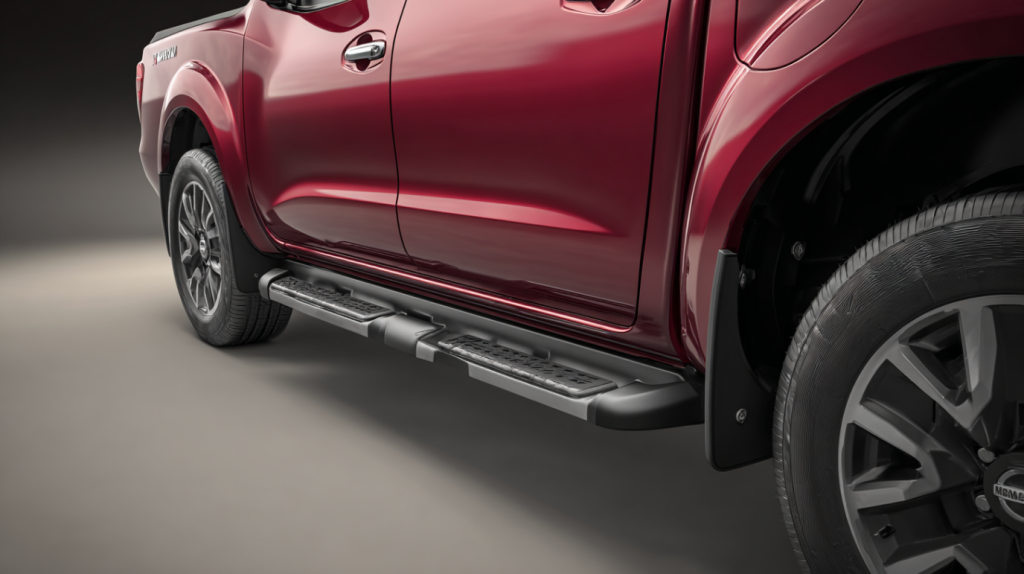

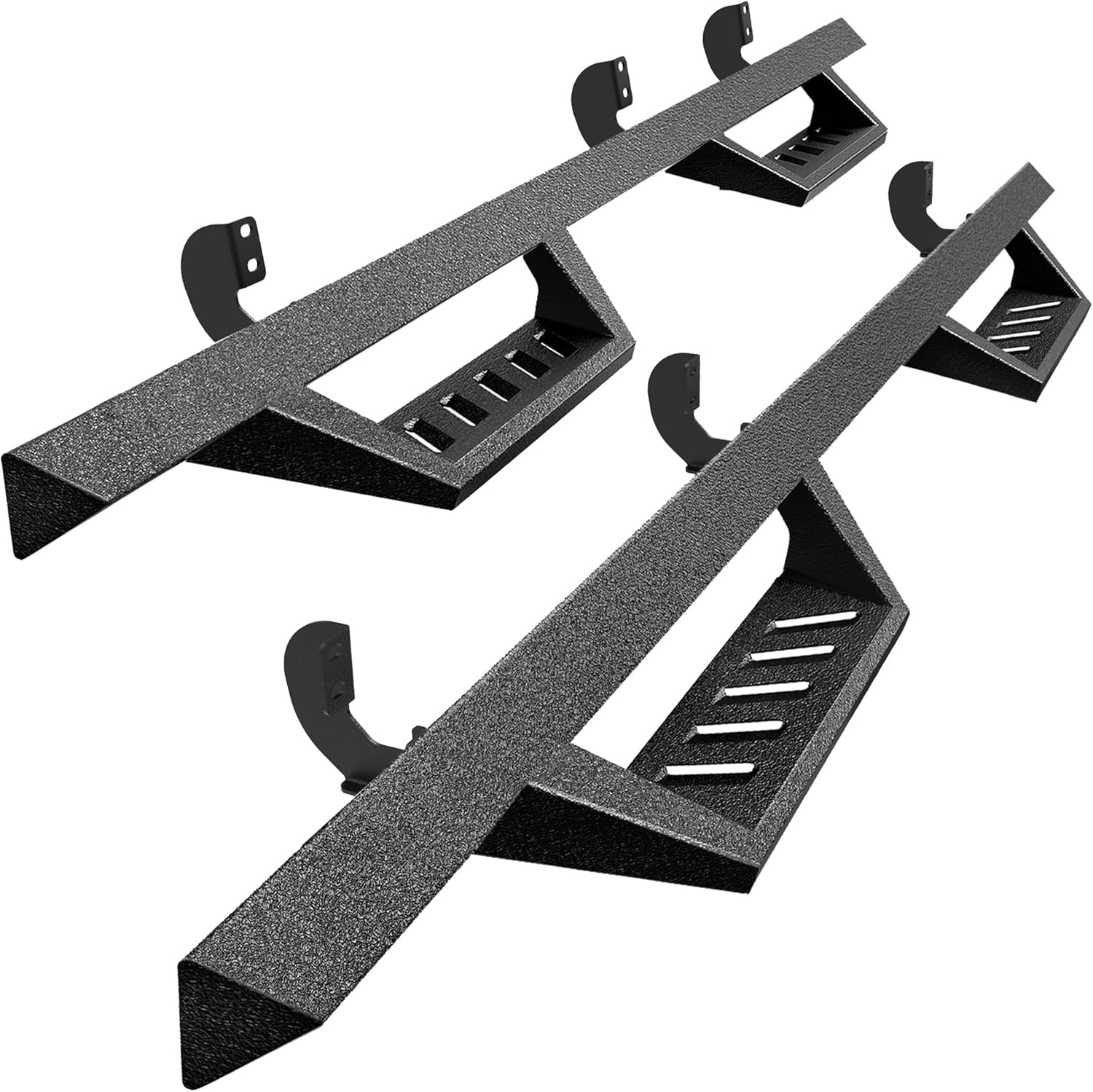
Tyger Auto LanderX Running Board Compatible with 2005-2025 Nissan Frontier | Crew Cab | TG-LX3N82398 | Drop Step Side Step Rail Nerf Bars
- FITMENT – {{ Enter the LICENSE PLATE in the Amazon Confirmed Fit tool at the top of this page to confirm your vehicle fitment with this product. }} Compatible with 2005-2025 Nissan Frontier | Crew Cab [Cab Size Note: Only fit Crew Cab with 4 full-size doors. (See Image for more info)]
- NOT YOUR CLASSIC DROP STEPS – LanderX’ triangular carbon steel tubing is designed and crafted to leave a lasting impression from all angles. All while offering the tube structure durable strength and support with a 5-inch drop, ensuring effortless entry and exit for you and your passengers. LanderX is the best option for owners with lifted pickup trucks & SUVs.
- HEAVY-DUTY MATERIAL CONSTRUCTION – Made of heavy-duty carbon steel molded into stylish triangular tube structure. Dual stage E-coating powder textured black finish bolsters these side bars with improved rust and corrosion resistance.
- WHAT’S INCLUDED FOR EASY INSTALLATION – Includes both driver and passenger side running boards. | Includes all hardware and brackets required to mount onto the rocker panel. | Easy bolt-on installation. | Installation can easily be done in 20 minutes. | Weight Capacity: 500 lb. | Ground Clearance approximately 8 in.
- BACKED BY TYGER – TYGER backs this product for 5 year for US customers against manufacturing defects!
$198.00
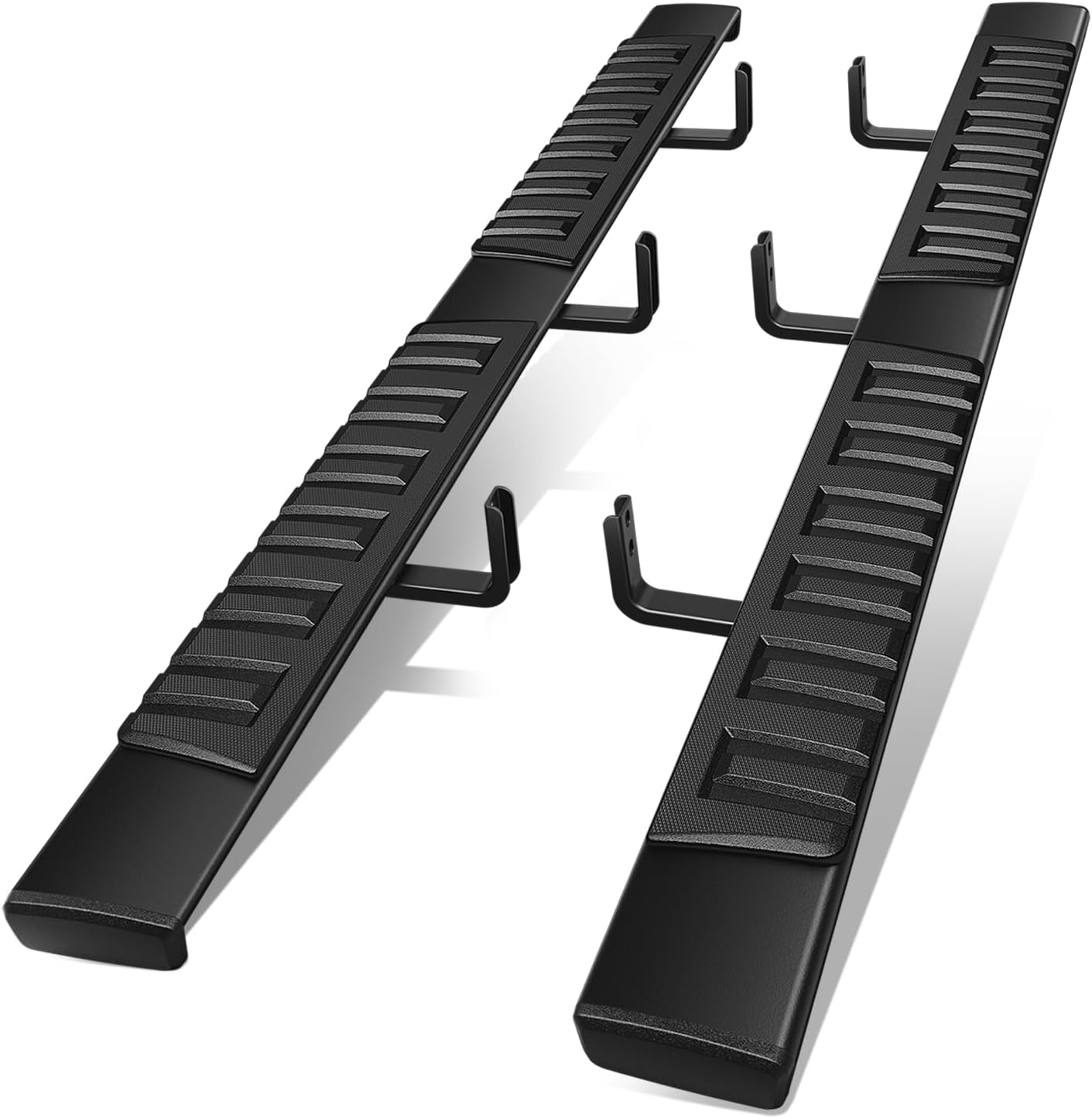
Auto Dynasty 6″ Running Boards for Truck 2005-2024 Nissan Frontier Crew Cab, Aluminum Side Steps, Black Powdercoated Nerf Bar
- Vehicle Compatibility – These running boards are compatible with Nissan Frontier 2005-2024, fits crew cab models.
- Brilliant Performance – Come with set of [2] powdercoated finish running boards with large slip-resistant step pads, can raised textured step pads for increased traction, support up to 450lbs.
- Solid Construction Design – It is constructed of durable and rust-resistant aluminum with heavy duty ABS plastic end caps to guarantee an extremely long lasting performance life in outdoor conditions.
- Simple Installation – Easy to install, no-drill installation bolts right to factory mounting points in less than an hour (most models). Please note: Vehicle specific mounting brackets included.
- Product Specifics – Weight Capacity: 450LBS | Width: 6″ | Overall Length: 82-5/8 | Item Weight: 34 LBS
$132.88
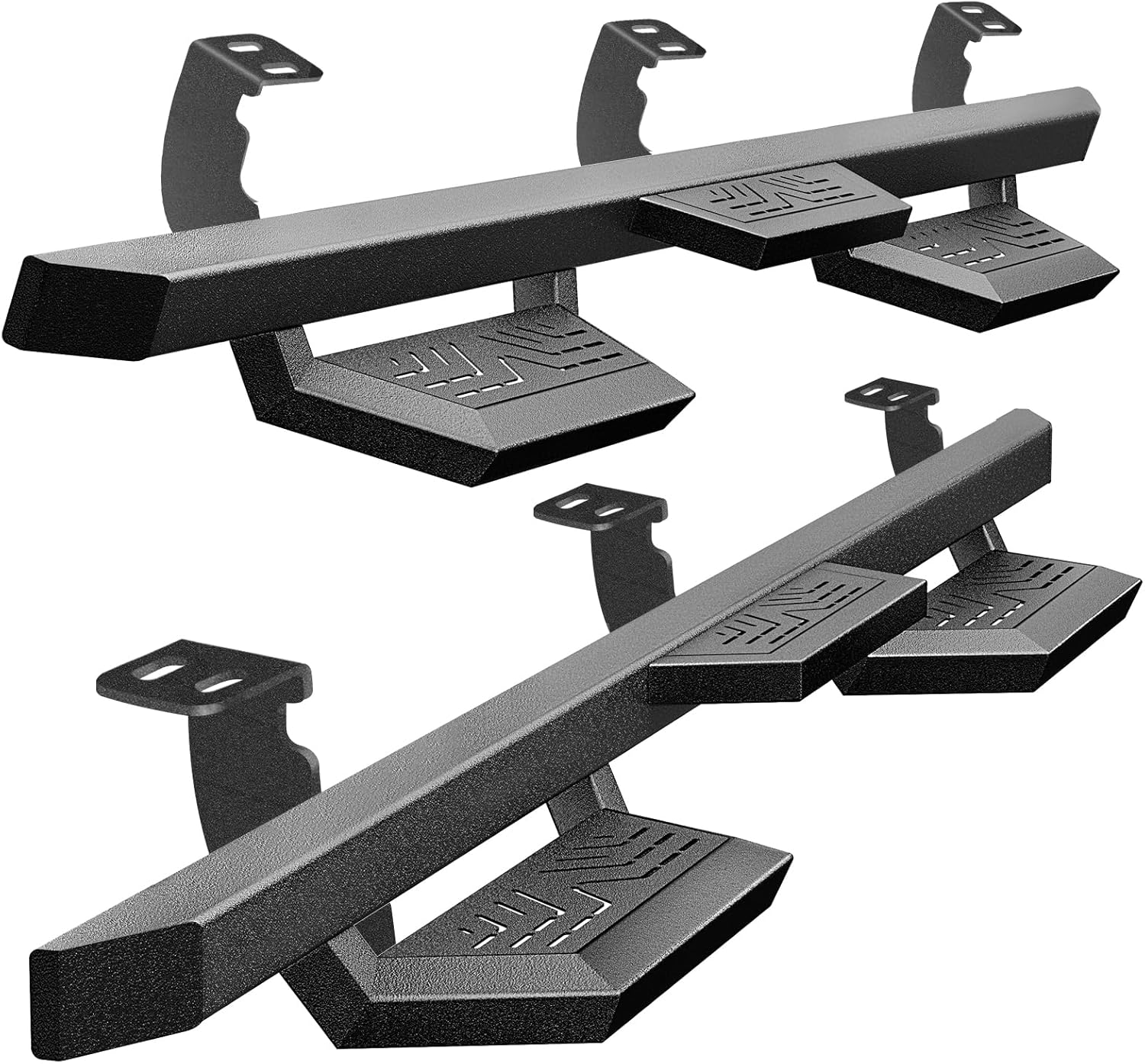
PZ Running Boards for 2005-2025 Nissan Frontier Crew Cab 4 Full Doors Only, Heavy Duty Carbon Steel Drop Down Side Steps Nerf Bars
- Fitment: Compatible with 2005-2025 Nissan Frontier Crew Cab 4 Full Doors Only. Please Double-Check your Vehicle Type.
- Durable & Sturdy: The side steps are made of heavy-duty carbon steel with a dual-textured black powder-coated finish, providing excellent rust and corrosion resistance for long-lasting durability. Each side supports up to 550 lbs, ensuring stability and reliability.
- Convenient Design: The raised middle step allows for easy access to store and retrieve items from the roof of truck. The 5.2-inch drop down step makes it effortless for you and your passengers to get in and out of the truck, enhancing overall comfort.
- Anti-Slip Safety: Featuring a laser-cut hollow design, the running boards provide a high-traction, slip-resistant surface for secure entry and exit, even in rainy or muddy conditions.
- Easy Installation: No drilling or cutting required—installation is quick and hassle-free. The package includes 2 running boards, mounting brackets, an instruction manual, and all necessary hardware.
$199.99
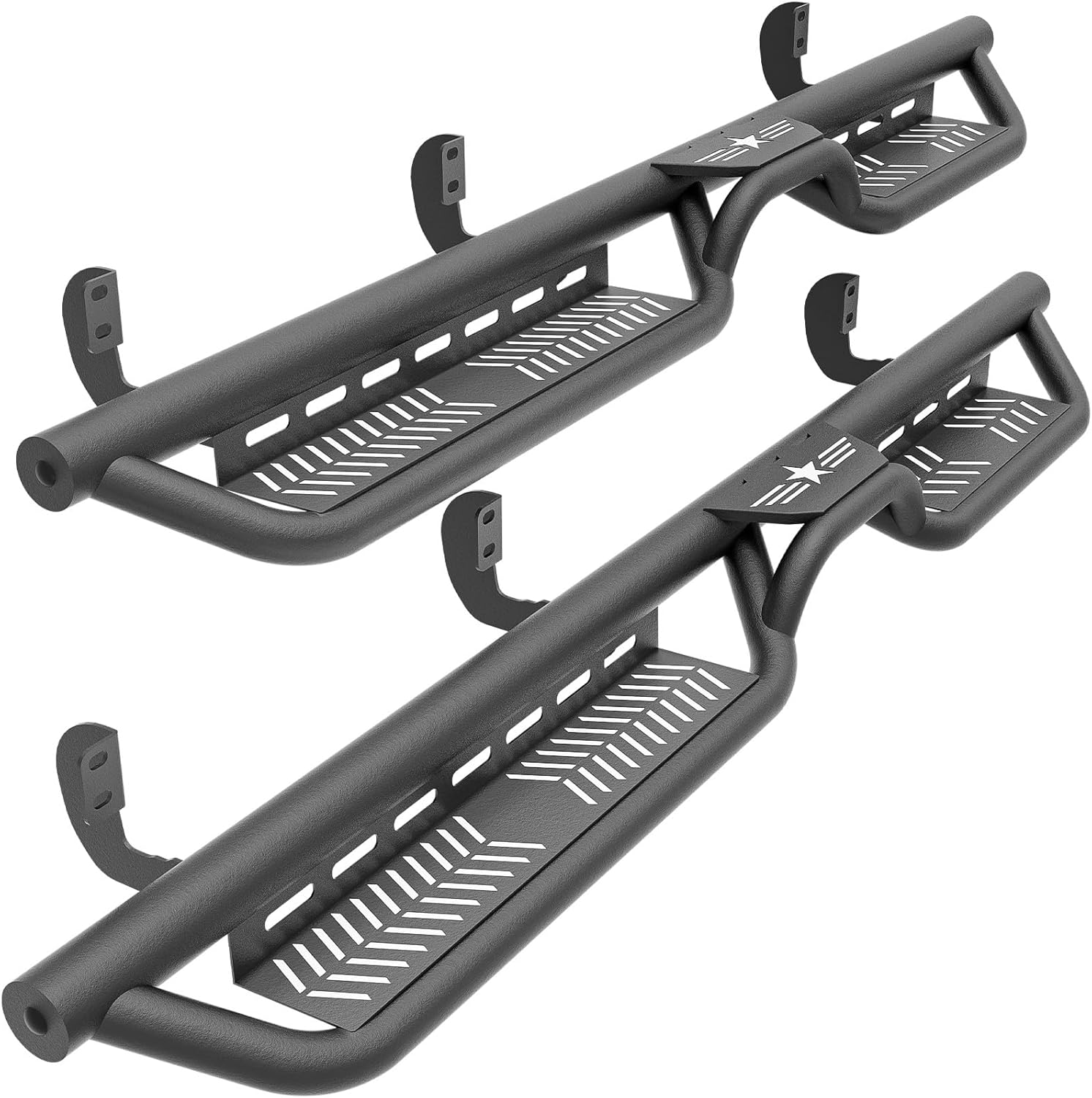
Running Boards Side Steps Compatible for 2005-2025 Nissan Frontier Crew Cab (4 Full Size Doors), Two Stairs Design Bolt-on Side Rails Step Nerf Bar (Black Powder Coated, Star Logo)
- 【Compatibility】: Two Stairs Design Drop Running Boards are compatible with 2005 2006 2007 2008 2009 2010 2011 2012 2013 2014 2015 2016 2017 2018 2019 2020 2021 2022 2023 2024 2025 Nissan Frontier Crew Cab (4 Full Size Doors). If you are not sure about your model, please check the cab dimensions picture.
- 【Durability】: The high – quality black powder coating offers superior rust and corrosion resistance. Made of 2 – millimeter – thick heavy – duty carbon steel, each side can support up to 550 pounds. Precision laser – cutting and stamping technologies create a non – slip step surface and enhance traction.
- 【Functional Design】:① The side steps feature a dual – layer layout, offering greater convenience for vehicles equipped with lift kits and oversized tires. It also facilitates easy access to the vehicle’s roof.② The 6 – inch drop – down step pads provide excellent accessibility for pickup trucks with lift kits and oversized tires, while maintaining sufficient ground clearance.
- 【Easy Installation】: Simple bolt – on installation requires no drilling or cutting. The precisely aligned mounting holes allow for installation in approximately 20 minutes. The package includes 2 side bars, a set of brackets, installation instructions, and all necessary hardware. No additional accessories are needed.
- 【Worry – Free Service】: Before placing an order, please ensure the accuracy of your vehicle model or check the cab pictures in the list. If you have any questions, feel free to contact us directly. We offer a 2 – year warranty for your peace of mind!
$198.99
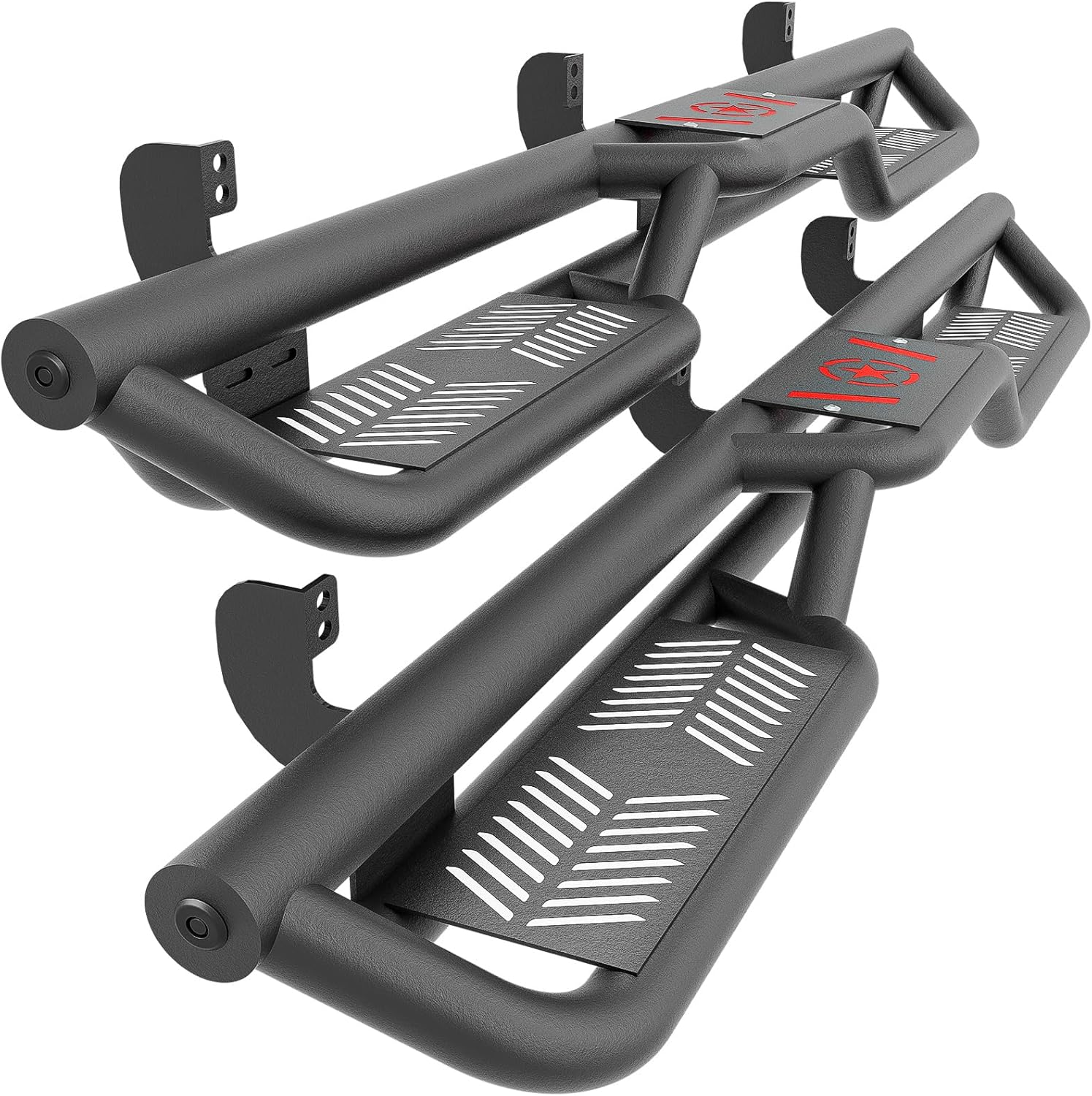
Running Boards Side Steps Compatible for 2005-2025 Nissan Frontier Crew Cab (4 Full Size Doors), Two Stairs Design Bolt-on Side Rails Step Nerf Bar (Black Powder Coated)
- 【Compatibility】: YZONA Two Stairs Design Drop Running Boards are compatible with 2005 2006 2007 2008 2009 2010 2011 2012 2013 2014 2015 2016 2017 2018 2019 2020 2021 2022 2023 2024 2025 Nissan Frontier Crew Cab (4 Full Size Doors). If you are not sure about your model, please check the cab dimensions picture.
- 【Functional design】: ① The side step features a two-tier layout, providing enhanced convenience for vehicles with lift kits and oversized tires. It also facilitates easier roof access. ② 6inch leaf shaped drop down step pad for great accessibility for pickup trucks with lift kits and oversized wheel tires keep enough ground clearance.
- 【Robust and Durable】: The high-quality black powder coating provides outstanding rust and corrosion resistance. Constructed from heavy-duty 2mm carbon steel, each side can withstand a weight of 550 pounds. Precision laser cutting and stamping techniques contribute to a non-slip step surface and enhanced traction.
- 【Easy Installation】: Simple bolt-on installation without the need for drilling or cutting. Precisely aligned mounting holes require only about 20 minutes for complete setup. The package includes 2 side bars, a set of brackets, installation instructions, and all necessary hardware—no additional parts required.
- 【No-hassle Service】: Before placing your order, please ensure the accurate vehicle model or check the cab picture in the listing. If you have any questions, feel free to contact us directly. We provide a 2-year warranty for your peace of mind!
$289.99
From struggling to climb into my truck to discovering the ideal solution – here’s everything I learned about choosing, installing, and loving step rails
I’ll never forget the moment I realized I needed step rails for my Nissan Frontier. There I was, in a parking lot after a particularly muddy off-road adventure, watching my wife struggle to climb into our lifted truck while juggling grocery bags and our toddler’s car seat. Her frustrated look said it all – something had to change. That’s when my journey into the world of Nissan Frontier step rails began, and let me tell you, I learned more than I ever expected about these seemingly simple accessories.
What started as a quick weekend project turned into weeks of research, phone calls to manufacturers, visits to auto parts stores, and countless hours reading through forums and product reviews. But now, after installing and living with step rails on my Frontier for over two years, I’ve become something of an unofficial expert among my truck buddies. So grab a coffee, settle in, and let me share everything I’ve discovered about buying the right step rails for your Nissan Frontier.
My Search for the Best Step Rails: What Actually Makes Them “Best”?
When I first started looking into the best step rails for a Nissan Frontier, I naively thought they’d all be pretty much the same. Boy, was I wrong. The market is flooded with options ranging from basic aluminum bars to elaborate multi-step systems with integrated LED lighting. After testing several brands and talking to other Frontier owners, I’ve learned that “best” really depends on your specific needs.
The top contenders I discovered fall into several categories. For pure durability and that rugged look, the heavy-duty steel options from brands like Westin and Tyger Auto consistently impressed me. These step rails feature powder-coated finishes that look mean and stand up to serious abuse. I watched a buddy with the Westin Pro Traxx literally use his step rail as a foothold while strapping down equipment on his roof rack – the thing didn’t even budge.
For those wanting a more refined appearance, the OEM-style aluminum rails offer a sleeker profile that complements the Frontier’s factory lines beautifully. Brands like Ionic and N-Fab produce step rails with a subtle, integrated look that could pass for factory equipment. My neighbor installed a set of these on his King Cab, and I’ve got to admit, they give the truck a sophisticated, finished appearance that my more industrial rails can’t match.
Then there are the hybrid options – my personal sweet spot. The Nissan Frontier step rails I ultimately chose combine aluminum construction for weight savings with reinforced steel mounting brackets for rock-solid stability. After two years of Colorado winters, summer road trips, and weekend trail riding, they still look and function like new. The textured step surface hasn’t worn smooth, the finish hasn’t faded, and most importantly, they’ve made getting in and out of my truck effortless for everyone in my family.
The Installation Adventure: From Terror to Triumph
Let me be honest about how to install step rails on a Nissan Frontier – it’s not rocket science, but it’s also not quite as straightforward as some manufacturers would have you believe. When my rails arrived, I looked at the instruction sheet (a single page with tiny diagrams) and felt my confidence drain away. But with patience, the right tools, and a helpful neighbor, we got it done in about two hours.
The installation process taught me several crucial lessons. First, step rails for the Frontier typically mount to existing holes in the frame, which sounds great until you’re lying on your back in the driveway trying to locate these holes through layers of undercoating and road grime. I ended up using a wire brush to clean the mounting points before starting – a step the instructions didn’t mention but absolutely should have.
Second, having a helper isn’t just recommended; it’s practically essential unless you’ve got three hands. While installing step rails myself, I needed someone to hold the rail in position while I started the bolts. My initial solo attempt resulted in dropped hardware, misaligned holes, and language my wife would rather not have heard from the garage. Once my neighbor came over, the process became manageable.
The hardware quality varies wildly between manufacturers, and this is where you really get what you pay for. The premium step rails I purchased came with stainless steel bolts, lock washers, and even thread-locking compound. A cheaper set I’d considered (and thankfully returned) included bolts that looked like they’d rust before I finished tightening them. Don’t skimp on quality here – these components are all that’s standing between your step rails and the pavement.
One tip I wish someone had told me: don’t fully tighten everything until all the mounting points are aligned and started. I made the mistake of torquing down the front bolts on my first side, only to find the rear holes slightly misaligned. I had to loosen everything and start over. Now when I help friends install their Nissan Frontier step rails, I always emphasize this point.
The Compatibility Puzzle: Will They Fit Your Frontier?
Here’s where things get interesting, and I learned this the hard way. Nissan Frontier step rails are definitely not universally compatible with all model years, despite what some online sellers might imply. The Frontier underwent significant changes between generations, and even within generations, there are variations between cab configurations that affect step rail fitment.
My 2019 Crew Cab required completely different step rails than my friend’s 2011 King Cab. The body mounting points changed location, the cab length is different, and even the ground clearance varies enough to affect which rails look proportional. I actually returned my first set of rails because, while they technically fit, they looked oddly short and left a gap that bothered me every time I looked at the truck.
The major compatibility breaks happen at these points: the 2005-2019 second-generation Frontiers share general compatibility, but King Cab and Crew Cab models need different length rails. Then came the 2020 redesign, which changed everything. The third-generation Frontier starting in 2022 requires its own specific step rails that won’t work on earlier models. Some manufacturers make “universal fit” rails, but in my experience, these are compromises that never quite look or fit as well as model-specific options.
When shopping for step rails for the Nissan Frontier, I learned to verify three things: the generation of Frontier, the cab configuration, and whether the truck has been lifted. That last point is crucial because a lifted Frontier changes the relationship between the body and the mounting points, potentially requiring longer or repositioned mounting brackets.
The Money Question: What You’ll Actually Spend
Let’s talk about the cost of step rails for a Nissan Frontier, because the price range is shockingly wide. I’ve seen basic tube-style rails for under a hundred dollars, and I’ve seen premium systems approaching a thousand. After researching and testing, I can tell you that there’s a sweet spot, and it’s not at either extreme.
Budget step rails in the $100-200 range typically get you basic aluminum or thin-gauge steel tubes with minimal mounting hardware. I examined several of these closely, and honestly, some would probably serve fine for a truck that sees primarily pavement duty. But the mounting brackets felt flimsy, the step surfaces were often smooth pipes without traction features, and the finishes looked like they’d oxidize quickly. For my truck that sees real use, these didn’t inspire confidence.
The mid-range options, between $250-450, represent where I found the best value. These Nissan Frontier step rails typically feature thicker materials, better mounting systems, textured step surfaces, and durable finishes. This is the category where my rails landed, and I’ve been nothing but pleased with the value proposition. They look expensive, feel solid, and have held up beautifully.
Premium step rails above $500 generally offer something special – perhaps integrated LED lighting, retractable mechanisms, or military-grade construction with lifetime warranties. Are they worth it? That depends on your budget and how you use your truck. A contractor who’s climbing in and out of their Frontier fifty times a day might justify the investment. For my weekend warrior lifestyle, the mid-range option was perfect.
Don’t forget installation costs if you’re not doing it yourself. Professional installation typically runs $150-300 depending on your location and the complexity of the rails. When calculating the cost of step rails, factor this in if you’re not confident in your mechanical abilities.
Where to Buy: Lessons from Shopping Around
My search for where to buy step rails for a Nissan Frontier took me on quite a journey. I visited auto parts stores, called dealerships, browsed online marketplaces, and even checked out a truck accessory show. Each source had advantages and drawbacks that surprised me.
The Nissan dealership was my first stop, assuming they’d have the “official” answer. They did stock OEM step rails, but the price was eye-watering – nearly double what I found elsewhere for similar quality. The parts manager did provide valuable information about compatibility and installation, which I appreciated, but I couldn’t justify the premium just for the Nissan badge.
Big-box auto parts stores had limited selection. Most carried one or two budget options that didn’t impress me. However, they did let me physically examine the step rails, which proved invaluable for assessing build quality. I could feel the difference between thin-gauge stamped steel and properly welded construction. This hands-on comparison helped calibrate my expectations for online shopping.
Online shopping opened up the world. Specialty truck accessory retailers offered dozens of options with detailed specifications, customer reviews, and often free shipping. This is ultimately where I purchased my step rails for the Nissan Frontier, from a retailer specializing in truck accessories. The selection was overwhelming at first, but the detailed product descriptions and comparison tools helped narrow down options.
Amazon and eBay offered competitive prices, and the customer reviews provided real-world insights. However, I was cautious about sellers on these platforms. Some were clearly drop-shippers with no actual product knowledge, while others were established brands using marketplace platforms for distribution. I learned to verify the actual manufacturer and read reviews carefully for fitment issues.
One unexpected source was truck forums and owner groups. Members sometimes sold barely-used step rails they’d removed to upgrade or change styles. I considered several of these but ultimately wanted new with a warranty. Still, for budget-conscious buyers, this represents a viable option.
Choosing the Right Rails: My Decision Framework
Learning how to choose the right step rails for my Nissan Frontier required developing a systematic approach. After initially feeling overwhelmed by options, I created a framework that helped clarify my priorities and led me to the perfect choice for my needs.
First, I considered usage patterns. My Frontier is a daily driver that also sees weekend trail duty and occasional towing. This meant I needed step rails tough enough for off-road abuse but refined enough to not embarrass me in the office parking lot. If your truck is primarily a pavement princess, your priorities might emphasize appearance over durability. Conversely, a dedicated work truck might prioritize function over form.
Ground clearance was my second consideration. I’ve got a modest lift on my Frontier, which changed the geometry of potential step rail installations. Standard rails would have ended up too high or looked disproportionate. I needed options designed to work with lifted trucks, which typically feature longer mounting drops or are specifically engineered for the altered stance.
Aesthetic preference played a bigger role than I initially expected. I showed my wife photos of different step rail styles, and her strong opinions helped narrow the field. She vetoed the aggressive, industrial-looking tube steps, preferring the cleaner lines of board-style rails. Since she uses the truck as often as I do, her input was legitimate and important.
Weight capacity became crucial when I really thought about it. Sure, I weigh enough that I need them to support me, but what about standing on them to access the roof rack? Loading kayaks? Changing light bulbs? I settled on step rails rated for at least 500 pounds per step, providing a safety margin for any conceivable use.
Maintenance requirements influenced my decision more than I expected. Some step rails require regular polishing or treatment to maintain their appearance. Others, like the powder-coated steel options I considered, are essentially set-and-forget. Given my limited time and general laziness about vehicle detailing, low-maintenance options ranked higher on my list.
Off-Road Durability: The Real-World Test
The question of whether Nissan Frontier step rails are durable for off-road use wasn’t theoretical for me – I needed rails that could handle real trails without becoming a liability. My research and personal testing revealed that this depends heavily on design and material choices.
Traditional round tube step rails offer excellent durability for off-road use. Their cylindrical shape naturally deflects impacts and obstacles rather than catching them. I’ve seen trucks with tube steps navigate rocky terrain where board-style rails would have been torn off. The trade-off is a smaller stepping surface that can be harder to use, especially in wet or muddy conditions.
Board-style step rails, which I ultimately chose, can absolutely handle off-road duty if properly designed. The key is construction quality and mounting system robustness. My rails feature thick aluminum tread with reinforced edges and mounting brackets that tie into multiple frame points. After two years of trail use, including some genuinely questionable decisions on my part, they show only minor scuff marks on the underside.
The critical vulnerability for step rails in off-road conditions isn’t actually the rails themselves – it’s the mounting hardware. Cheap bolts will work loose from vibration and impact. Low-quality brackets will flex and eventually crack. This is why I emphasize investing in quality mounting components. My rails came with grade-8 bolts, lock washers, and brackets cut from quarter-inch steel. This hardware has proven bulletproof.
I learned to adjust my driving style slightly with step rails installed. The increased width means being more conscious of trail obstacles and choosing lines that won’t catch the rails. It’s not a major limitation, just an awareness. The benefit – easier access to the truck in remote locations – far outweighs this minor consideration.
Rock strikes are inevitable in off-road use. My step rails have taken several hits that made me wince, but the powder-coated finish has proven remarkably resistant to chipping. When small chips do occur, a dab of touch-up paint prevents rust from taking hold. The structural integrity remains perfect despite cosmetic battle scars.
Material Matters: What Your Rails Are Really Made Of
Understanding what materials Nissan Frontier step rails are made of proved essential to making an informed choice. The materials determine not just durability, but also weight, corrosion resistance, and maintenance requirements.
Aluminum step rails dominate the market, and for good reason. Aircraft-grade aluminum alloys provide excellent strength-to-weight ratios, natural corrosion resistance, and often come with extruded or molded traction patterns. My rails feature 6063-T5 aluminum, an alloy known for durability and resistance to weathering. After two winters with road salt exposure, they show zero corrosion.
The aluminum construction keeps weight minimal, which matters more than you might think. Heavier steel step rails add 50-80 pounds to your truck, affecting fuel economy and handling slightly. Aluminum rails typically add 20-35 pounds – negligible in practical terms. This weight difference also made solo installation more manageable.
Steel step rails appeal to those prioritizing maximum strength and that industrial, heavy-duty aesthetic. Modern powder-coating technology has largely solved steel’s traditional corrosion problems, though any chip in the coating can potentially lead to rust. Steel rails typically cost less than aluminum equivalents and can support higher weights, though this rarely matters in real-world use.
Stainless steel represents the premium option in metal step rails. True 304 or 316 stainless offers unmatched corrosion resistance and a distinctive polished appearance. However, expect to pay significantly more, and that polished finish requires regular cleaning to prevent water spots and maintain the shine. For most Frontier owners, the cost doesn’t justify the marginal benefits over quality aluminum.
The mounting brackets deserve special attention when considering materials. My step rails use steel brackets despite the aluminum steps, providing optimal strength where it matters most. This hybrid approach balances weight savings with mounting security. Some cheaper rails use all-aluminum construction, including brackets, which concerned me from a long-term durability standpoint.
The step surface material varies significantly. Basic step rails feature smooth aluminum or steel, which becomes treacherously slippery when wet. Better options include molded traction patterns, rubber tread inserts, or aggressive diamond-plate texturing. My rails have a raised tread pattern that provides excellent grip even in snow and ice, something I appreciate every winter morning.
Maintenance and Care: Keeping Them Looking New
Learning how to maintain and clean step rails on a Nissan Frontier was easier than I expected, though I did make some mistakes initially. The good news is that quality step rails require minimal maintenance when you use the right approach.
My regular maintenance routine is embarrassingly simple. Every few weeks, when I wash the truck, I pay special attention to the step rails with a soft brush and car wash soap. This removes accumulated dirt, road salt, and grime before it can cause problems. The textured step surface can trap debris, so I use a stiff brush to work cleaning solution into the grooves.
I learned the hard way not to use harsh chemicals or abrasive cleaners on step rails. In my first month of ownership, I used a degreaser on some stubborn grime, and it slightly dulled the powder-coated finish. Now I stick to gentle automotive cleaners designed for painted surfaces. They’re effective without risking damage to the protective coating.
Winter maintenance requires extra attention. Road salt is murder on anything metal, and while my step rails are well-protected, I make a point to rinse them thoroughly after driving in winter conditions. A simple spray with the garden hose removes salt residue before it can attack the finish. This five-minute task has kept my rails looking nearly new.
The mounting hardware gets an annual inspection. I crawl under the truck and check each bolt for tightness and any signs of corrosion. So far, everything has remained tight and corrosion-free, but this preventive check gives me peace of mind. I also inspect the brackets for any cracks or stress signs, though I’ve found none.
For step rails with a polished or brushed finish, maintenance is more intensive. A friend with polished stainless rails spends significant time removing water spots and maintaining the shine. He uses specialized metal polish monthly, while I simply spray mine with the hose. This maintenance difference factored into my material choice.
Scratches and scuffs are inevitable with step rails that actually get used. Minor surface scratches don’t concern me – they’re proof the rails are doing their job. Deeper gouges that expose bare metal do need attention. I keep a small bottle of matching touch-up paint for these situations. A quick dab prevents rust and keeps the rails looking maintained.
Rust Resistance: The Long-Term Reality
The question of whether step rails for the Nissan Frontier are rust-resistant matters enormously for longevity, especially in climates with winter salt or coastal humidity. My experience and research revealed that rust resistance depends heavily on material choice and finish quality.
Modern powder-coating technology has revolutionized rust protection for steel step rails. The powder-coat finish on my rails is electrostatically applied and oven-cured, creating a barrier far superior to traditional paint. After two years in Colorado, with winter salt exposure and summer UV bombardment, the finish remains intact with zero rust anywhere.
However, powder-coating is only as good as its application. Cheap step rails sometimes feature thin or poorly applied powder coating that chips easily. Any chip through to bare metal becomes a rust initiation point. When evaluating rails, I looked for thick, even coating with no thin spots or rough areas. Quality manufacturers apply multiple layers for optimal protection.
Aluminum step rails offer inherent rust resistance since aluminum doesn’t rust in the traditional sense. It can oxidize, forming a white, powdery surface, but this process is self-limiting and doesn’t compromise structural integrity. Even if the anodized or powder-coated finish on aluminum rails fails completely, the underlying material remains sound.
The mounting hardware represents a critical rust vulnerability that many people overlook. My step rails came with stainless steel or zinc-plated bolts and washers, which have shown zero corrosion. Budget rails often include plain steel hardware that rusts quickly. When the bolts rust, they can seize, making removal difficult or impossible. They can also weaken, creating a safety hazard.
I’ve seen step rails on older Frontiers that look nearly new and others that are rust-stained disasters. The difference isn’t age – it’s maintenance and initial quality. Rails that are regularly cleaned and dried, with intact finishes, resist rust indefinitely. Neglected rails, especially those with finish damage, can show significant rust in just a few years.
Coastal owners face special challenges with rust. Salt air is relentless, attacking any metal surface. Friends in coastal areas report that even quality step rails require more frequent inspection and cleaning. Some apply additional protective coatings like wax or specialized rust preventatives. It’s extra work but necessary for long-term preservation.
The Benefits: Why I’m Glad I Made This Investment
Reflecting on the benefits of adding step rails to a Nissan Frontier, I realize this modification exceeded my expectations in several ways. What started as a simple accessibility upgrade has enhanced my truck ownership experience more than I anticipated.
The obvious benefit is improved entry and exit. My wife, who’s six inches shorter than me, struggled with the stock truck height, especially after I added larger tires. Now she climbs in and out confidently and comfortably. My elderly father, who loves riding in the truck but previously needed a hand up, now enters independently. This accessibility improvement alone justified the investment.
Protection for the truck’s body was an unexpected benefit. The step rails shield the lower door panels and rocker panels from rock chips, parking lot dings, and general abuse. I’ve watched shopping carts bounce off the rails instead of denting my door. Trail brush scrapes the rails instead of my paint. This protective function has already prevented damage worth more than the rails cost.
The enhanced appearance surprised me. I thought step rails were purely functional, but they dramatically improved my Frontier’s visual appeal. The truck looks more complete, more finished, more intentional. The rails add visual width and presence that makes the Frontier look more substantial. I receive compliments regularly from people who notice the improvement.
Functionality extends beyond just stepping. I use the step rails as foothold when accessing the roof rack, as a stable platform when working under the hood, and even as convenient tie-down points for securing loads. These secondary uses happen more often than I expected and add genuine value.
The resale value impact is debatable but likely positive. While step rails might not appeal to every potential buyer, they’re a desirable feature for many. More importantly, they demonstrate that the truck has been cared for and thoughtfully equipped. When I eventually sell my Frontier, I believe the rails will be an asset rather than a liability.
Safety became a significant benefit I didn’t fully anticipate. The textured step surface provides secure footing in all conditions, reducing slip and fall risk. This matters especially in winter when ice and snow make smooth surfaces treacherous. My wife specifically commented on feeling safer entering and exiting the truck in winter conditions.
DIY or Professional: Making the Installation Choice
Deciding whether I could install step rails on my Nissan Frontier myself or needed professional help required honest self-assessment of my mechanical abilities and available time. Having now installed rails personally and helped several friends with theirs, I can offer perspective on this decision.
The step rail installation process is mechanically straightforward – you’re essentially bolting components to existing frame points. If you’ve successfully completed basic automotive maintenance like changing brake pads or installing a hitch, you can probably handle this. The skills required include safely lifting and supporting the vehicle, using hand tools competently, and following instructions carefully.
However, “straightforward” doesn’t mean “easy.” The physical demands surprised me. Wrestling 30-pound rails into position while lying under a truck tests patience and back strength. Having an assistant transforms this from frustrating to manageable. Solo installation is possible but significantly harder and risks damage to the rails or truck if things slip.
The tools required are basic but essential. You need a jack and jack stands or a lift, a socket set with extension bars, possibly a drill for some installations, and penetrating oil for cleaning mounting points. I already owned everything needed, but if you don’t, the tool investment might approach the cost of professional installation.
Time commitment varies based on experience. My first installation took three hours with help. Subsequent installations on friends’ trucks took under two hours. Professional installers, working with lifts and experience, typically complete the job in under an hour. If your time is valuable or limited, professional installation makes sense economically.
The complexity varies by step rail design. Basic tube-style rails with four or six mounting points are genuinely simple. More elaborate systems with multiple brackets, additional hardware, or integrated lighting increase complexity significantly. When researching rails, I specifically avoided complicated installation procedures.
Professional installation offers advantages beyond just convenience. Shops have proper lifts, making the work safer and easier. They’re experienced with common fitment issues and know the tricks to solve them. Most importantly, they typically warranty their work – if something goes wrong, they fix it free.
The cost of professional installation varies by location and shop. Dealership service departments typically charge the most, $200-300 for installation. Independent shops might do it for $100-150. Some retailers include free installation with purchase. Mobile installation services have emerged in some areas, coming to your location for moderate fees.
I chose DIY installation primarily because I enjoy working on my truck and wanted the learning experience. The satisfaction of completing the project successfully added value beyond the money saved. However, I don’t judge anyone who chooses professional installation – it’s a perfectly reasonable decision, especially for those without tools, space, or inclination for the work.
OEM vs Aftermarket: The Options Comparison
Researching whether OEM step rails are available for the Nissan Frontier led me down an interesting path comparing factory and aftermarket options. Both exist, and both have legitimate cases depending on your priorities and preferences.
Nissan does offer factory step rails through their dealer parts network. These are designed specifically for the Frontier, guaranteed to fit perfectly, and backed by Nissan’s warranty. The fitment is indeed perfect – tolerances are tight, finish matches factory quality, and installation follows Nissan’s specifications exactly. For owners who want absolute certainty and don’t mind paying premium prices, OEM is the safe choice.
The OEM step rails I examined at my local dealer were well-built aluminum construction with a quality powder-coat finish. They looked good, felt solid, and came with complete installation hardware and detailed instructions. The parts manager confirmed they’re the same components installed on Frontiers that come with factory step rails.
However, the price shocked me. The OEM step rails cost nearly twice what I paid for premium aftermarket options of comparable quality. I couldn’t justify the premium for what appeared to be similar materials and construction. Unless you’re absolutely committed to all-OEM accessories, the price difference is hard to swallow.
Aftermarket step rails offer tremendous variety in styles, prices, and features. Want aggressive tube steps? Available. Prefer sleek running boards? Multiple options. Desire integrated LED lighting? Several manufacturers offer it. This variety lets you customize beyond what Nissan offers, finding exactly what matches your vision for your truck.
Quality varies dramatically in the aftermarket world. Top-tier manufacturers like Westin, N-Fab, and Ionic produce step rails that match or exceed OEM quality at lower prices. Budget brands cut corners with thinner materials, cheaper finishes, and minimal hardware. The key is researching specific products and brands rather than making assumptions.
Warranty differences deserve consideration. OEM step rails carry Nissan’s warranty, typically matching your vehicle warranty period. Premium aftermarket options often include lifetime warranties against defects and workmanship. Budget aftermarket rails might include minimal or no warranty. This protection matters for long-term peace of mind.
I chose aftermarket step rails after careful research and comparison. The specific model I selected offered features unavailable from Nissan (longer mounting drops for my lift, more aggressive step texture) at 40% lower cost. Two years later, I remain convinced this was the right choice for my situation.
Aesthetic Impact: More Than Just Function
The question of how step rails improve the appearance of a Nissan Frontier initially seemed secondary to me. I was focused on function and didn’t expect the visual transformation to matter much. I was completely wrong – the aesthetic impact has been one of my favorite aspects of this modification.
Step rails fundamentally change the Frontier’s visual proportions. The truck sits relatively high, and the gap between the ground and rocker panels can make it look awkward or unfinished. Quality rails bridge this gap, creating visual continuity between the wheels and body. The effect is subtle but significant – the truck simply looks more complete and intentional.
The style you choose dramatically affects the overall aesthetic. Tube-style step rails create an aggressive, off-road appearance that emphasizes the Frontier’s truck capabilities. Board-style rails, like mine, offer a more refined, upscale look that works equally well at the trailhead or country club. Your choice should complement how you use the truck and the image you want to project.
Color matching matters more than I expected. Black powder-coated step rails create contrast against lighter truck colors, emphasizing the rails and creating a more aggressive look. Chrome or polished options complement chrome trim and create a coordinated, traditional appearance. I chose black rails on my white Frontier specifically for the contrast and modern aesthetic.
The step rail installation changed how people perceive my truck. Before installation, it looked like a basic work truck. After installation, it looks equipped and purposeful. Multiple people have commented that the truck “looks tough” or “looks ready for anything” – purely based on the visual impact of the rails. This perception shift has been oddly satisfying.
Proportional sizing affects appearance significantly. Step rails that are too short for the cab look incomplete and awkward. Rails that extend appropriately, following the cab’s lines, look integrated and intentional. When researching options, I specifically verified that the rails extended far enough forward and back to balance visually with my Crew Cab’s length.
The mounting height influences both function and appearance. Step rails mounted too low provide less ground clearance and can drag on obstacles. Rails mounted too high look disconnected from the vehicle and are less functional. The best options find the sweet spot where they’re accessible for stepping while maintaining visual connection to the truck’s body lines.
Brand Comparison: What I Discovered
My research into what brands make the best step rails for the Nissan Frontier revealed distinct differences in quality, features, and value. After examining products from over a dozen manufacturers, several brands consistently stood out for different reasons.
Westin emerged as the gold standard for heavy-duty applications. Their step rails feature thick-wall steel construction, aggressive styling, and extensive testing. Multiple Frontier owners I interviewed who use their trucks hard – contractors, off-road enthusiasts, ranchers – swear by Westin products. The trade-off is weight and cost, both significantly higher than average.
N-Fab specializes in aggressive, off-road-oriented step rails with distinctive styling. Their products feature multiple tube configurations, available in various finishes, with excellent build quality. The unique aesthetic either appeals strongly or doesn’t – there’s little middle ground. For owners wanting their Frontier to look ready for anything, N-Fab delivers that image convincingly.
Ionic offers premium aluminum step rails with sophisticated styling and excellent fit and finish. These were my second choice, ultimately losing to my final selection only on price. The quality was evident in every detail – tight tolerances, flawless welds, thick materials. For owners prioritizing aesthetics and refinement, Ionic deserves serious consideration.
Tyger Auto represents excellent value in the mid-range category. Their step rails offer surprisingly good quality at moderate prices. The materials and construction aren’t quite at premium levels, but they significantly exceed budget options. For buyers balancing budget and quality, Tyger presents a compelling option.
APS (Auto Parts Stocker) produces a wide range of step rail styles at competitive prices. Their products serve well for buyers who want decent quality without premium pricing. The finish quality and mounting hardware aren’t quite at top-tier levels, but for primarily pavement use, they perform admirably.
Budget brands like DNA Motoring and AA Products flood online marketplaces with low-priced step rails. I examined several of these closely, and honestly, some would probably function adequately for light use. However, the thin materials, basic finishes, and minimal mounting hardware didn’t inspire confidence for my intended use.
The brand I ultimately chose – and I’m being intentionally vague here to avoid sounding like an advertisement – balanced premium materials with reasonable pricing. After two years, they’ve performed flawlessly, confirming that my selection process successfully identified the sweet spot between quality and cost.
Removal Process: When You Need to Take Them Off
Understanding how to remove step rails from a Nissan Frontier wasn’t initially on my research agenda, but I learned about it anyway after helping a friend remove rails to repair body damage. The process is straightforward but has some nuances worth knowing.
The basic removal process reverses installation. You support the truck safely, remove the mounting bolts, and carefully lower the step rails away from the vehicle. Simple in theory, but reality includes challenges like seized bolts, hidden mounting points, and the awkward weight distribution of the rails themselves.
Penetrating oil is your friend for removal. Even quality stainless hardware can bind slightly after exposure to weather and road conditions. I spray all bolts with penetrating oil and let them sit overnight before attempting removal. This simple step has prevented rounded bolt heads and frustration every time.
The step rails become awkward once bolts are removed. They’re heavy enough to be unwieldy but not heavy enough to stay put. Having assistance prevents them from falling and potentially denting the truck or damaging themselves. On the one removal I did solo, I used a floor jack to support the rail while I removed the last bolts.
Bolt preservation matters if you plan to reinstall the step rails later. I store removed hardware in labeled bags with the rails to ensure nothing gets lost. The specific bolts and washers that came with quality rails are often superior to generic replacements and worth preserving.
The mounting points should be inspected during removal. I check for any corrosion, damaged threads, or concerns with the frame mounting points. This is also an opportunity to clean road grime from these areas and apply rust protection if desired.
Reasons for removal vary. Some owners remove step rails seasonally, using them in winter for accessibility but removing them in summer for maximum ground clearance. Others remove rails for specific off-road trips where extreme clearance is necessary. Some remove them to accommodate different accessories or for body work access.
I considered getting removable step rails but decided the permanent installation better suited my needs. The minor ground clearance loss hasn’t affected my trail riding, and the convenience of always having them available outweighs any theoretical benefit of removability.
Style Variations: Finding Your Perfect Look
Discovering that step rails for the Nissan Frontier come in different sizes and styles opened up possibilities I hadn’t initially considered. The variety extends far beyond basic functional differences into genuine aesthetic and feature distinctions.
Tube-style step rails represent the traditional, rugged approach. Single, double, or even triple tube configurations create different looks and functionality. Single tube rails offer maximum ground clearance and simplicity. Multi-tube designs provide more robust appearance and sometimes include additional mounting points for extra stability. I considered these seriously for their off-road credibility.
Running board style step rails offer wider stepping surfaces in a lower-profile design. These integrate closer to the truck’s body, creating a more refined appearance than aggressive tube steps. The wider step surface appeals to some users, though I found the textured surface on my current rails provides better grip than wider smooth surfaces.
Cab-length versus wheel-to-wheel is a critical size decision. Cab-length step rails extend only along the cabin, from front to rear doors on Crew Cabs. Wheel-to-wheel extends from front wheel opening to rear wheel opening, providing more stepping options but potentially affecting approach and departure angles. My Crew Cab has cab-length rails that balance accessibility with ground clearance.
Retractable step rails represent cutting-edge technology but weren’t right for me. These motorized systems deploy when doors open and retract when doors close, maximizing ground clearance when not needed. They’re impressive but expensive, add complexity, and introduce potential failure points. For hardcore off-roaders, they make sense; for my use, the cost couldn’t be justified.
Finish options go far beyond basic black or chrome. Texture powder coating, brushed stainless, polished aluminum, and even color-matched options exist. I chose texture black powder coat for durability and contemporary appearance. Friends with chrome rails spend significant time maintaining the shine – beautiful but labor-intensive.
Integrated features differentiate premium step rails. Some include LED lighting strips, providing illumination when doors open. Others incorporate hitch mounting points or recovery hook attachment provisions. These features add functionality but also cost and complexity. I stayed with simple, dedicated rails without integrated features.
Custom lengths accommodate lifted trucks, specific cab configurations, and personal preferences. Some manufacturers offer step rails in multiple lengths for the same truck model, allowing you to choose exact coverage. This customization ensures optimal fit and appearance for your specific Frontier configuration.
The Retractable Question: Worth the Premium?
Investigating whether retractable step rails are available for the Nissan Frontier led me into the premium accessory world. These high-tech systems fascinated me, though I ultimately decided against them for my truck. Still, they deserve serious consideration for certain users.
Retractable step rails solve the fundamental compromise between accessibility and ground clearance. When you need them, they’re there. When you don’t, they tuck away against the frame, providing nearly stock ground clearance. This functionality appeals strongly to serious off-roaders who want convenience without compromise.
The systems I researched use electric motors to extend and retract the step rails automatically when doors open and close. The engineering is impressive – sensors detect door operation, motors deploy or retract the rails in seconds, and the whole system resets when the door closes. Watching demonstration videos, I was genuinely impressed by the smooth operation.
However, the cost is substantial. Retractable step rails typically cost three to five times more than quality fixed rails. For the Nissan Frontier, systems often exceed $1,500, with professional installation adding several hundred more. This investment requires serious justification beyond simple convenience.
Reliability concerned me with retractable step rails. Every moving part is a potential failure point, and these systems include motors, sensors, wiring, and mechanical linkages all exposed to weather, road salt, and vibration. While manufacturers warranty their products, I worried about long-term durability in harsh Colorado conditions.
The added weight and complexity of retractable step rails affects the truck slightly. The motorized systems are heavier than fixed rails, and they draw minimal power from the electrical system. Neither factor is significant in practical terms, but they represent added complexity to the truck’s systems.
Several Frontier owners I encountered had retractable step rails, and experiences varied. Those who primarily used their trucks on-road but wanted maximum clearance for occasional trails loved them. Those with daily off-road use reported occasional issues with mud or debris interfering with the retraction mechanism.
I concluded that retractable step rails represent excellent engineering solving a specific problem. For my use case – weekly trail riding with occasional technical sections – fixed rails provide adequate clearance without the cost and complexity of retractable systems. But for someone pushing their Frontier’s limits regularly, the retractable investment could make sense.
Weight Capacity: The Hidden Safety Factor
Learning how much weight Nissan Frontier step rails can support proved more important than I initially realized. This specification directly affects safety and functionality, yet many buyers overlook it entirely when making decisions.
Most quality step rails specify weight capacity per step or total system capacity. Common ratings range from 300 to 600 pounds per step, with premium options sometimes exceeding this. My rails are rated at 500 pounds per step, which provides comfortable safety margin for any reasonable use scenario.
The specified capacity isn’t just about your body weight stepping into the truck. Consider standing on the step rails to access the roof rack while holding cargo. Think about using them as footholds when washing or maintaining the truck. Imagine someone stepping on them while you’re already standing there. These scenarios can briefly exceed simple body weight.
Testing methods for weight ratings vary between manufacturers. Some use static load testing – placing weight on the rail and verifying it holds without permanent deformation. Others employ dynamic testing, simulating repeated impacts and stress cycles. The most thorough manufacturers use both methods plus safety factors.
The mounting system determines actual capacity more than the rail material itself. Aluminum or steel step rails of similar construction can support similar weights if properly mounted. The critical factors are bracket thickness, number of mounting points, bolt quality, and how forces distribute to the frame.
I tested my step rails unscientifically but adequately by having three adults stand on them simultaneously while installing roof rack cargo. The rails didn’t flex, creek, or show any concern. This real-world test confirmed that the 500-pound rating provides genuine capability, not just theoretical marketing numbers.
Lower-quality step rails sometimes lack any weight rating specification, which should be a red flag. If a manufacturer isn’t confident enough to specify capacity, I’m not confident enough to trust the product. This information should be readily available in product specifications.
The liability concerns are real. If step rails fail under normal use, causing injury, the manufacturer faces potential lawsuits. Reputable companies specify conservative ratings they can defend. Budget manufacturers might inflate ratings or omit them entirely, transferring risk to consumers.
Lifted Truck Compatibility: The Clearance Challenge
The question of whether step rails for the Nissan Frontier are compatible with lifted trucks was crucial for me since I run a modest lift. This compatibility extends beyond simple fitment to affect functionality, appearance, and installation complexity.
Standard step rails can physically bolt to lifted Frontiers if you’re using the same mounting points. However, the increased ride height changes the relationship between the truck body and the rails. On a stock-height truck, rails might sit 18 inches off the ground. On a lifted truck, they might be 22-24 inches up, reducing their effectiveness.
Extended drop brackets solve this problem. These specialized mounting components lower the step rails relative to the body, maintaining optimal step height despite the lift. My rails came with adjustable-drop brackets offering three mounting positions, allowing me to dial in the perfect height for my specific lift.
Ground clearance becomes a concern with extended drops. Lowering the step rails to proper step height potentially reduces clearance below stock levels. This creates a compromise – accessibility versus ground clearance. My solution involved choosing rails with good clearance even with drops, accepting slightly less convenient step height as the trade-off.
The visual proportions change on lifted trucks. Step rails that look perfectly sized on stock trucks can appear too small or poorly positioned on lifted versions. I specifically searched for rails designed with lifted applications in mind, ensuring the proportions would work with my truck’s altered stance.
Some manufacturers produce step rails specifically for lifted applications, with geometry designed for the altered body position. These specialized products often include longer mounting brackets as standard equipment and are engineered with lifted truck proportions in mind. They cost slightly more but eliminate compatibility guessing.
Installation complexity increases with lifts. The stock mounting holes remain in the same locations, but accessing them relative to the lifted body position can be awkward. Extended brackets add components and adjustment requirements. My installation took slightly longer than it would have on a stock truck, but the outcome justified the extra effort.
Testing step rail clearance after installation is important on lifted trucks. I drove my Frontier through my usual trails, watching for any contact or clearance issues. The rails cleared everything the truck cleared, confirming that the installation height was properly chosen.
Friends with more extreme lifts – six inches or more – face greater challenges. Some have resorted to completely custom step rail installations with fabricated brackets. Others accept that accessibility decreases with extreme lifts and skip step rails entirely. My three-inch lift represents a sweet spot where aftermarket solutions work well.
The Final Word: Two Years of Real Experience
After two years and approximately 30,000 miles with my Nissan Frontier step rails, I can confidently say they’ve been one of the best modifications I’ve made to my truck. They solved the accessibility problem that prompted the purchase, but they’ve also added protection, improved appearance, and enhanced functionality in ways I didn’t fully anticipate.
The buying process taught me valuable lessons about researching automotive accessories. Reading product descriptions isn’t enough – you need to seek out real user reviews, examine products physically when possible, and understand the specific compatibility requirements for your exact vehicle configuration. The extra research time I invested paid dividends in satisfaction with my final choice.
Installation tested my mechanical abilities and patience, but completing it successfully provided genuine satisfaction. The process isn’t beyond most mechanically-inclined owners, though professional installation is perfectly reasonable for those who prefer it. Either way, the outcome transforms the truck’s usability and appearance.
Quality matters enormously with step rails. The difference between budget and premium options isn’t subtle – it’s evident in materials, finish quality, mounting hardware, and long-term durability. My mid-range investment has proven wise, providing excellent value without the premium price of top-tier options or the compromises of budget products.
The maintenance requirements have been minimal, confirming that quality step rails are truly a set-and-forget modification. Regular cleaning during normal truck washing, occasional hardware inspection, and touch-up of any finish damage represents the total maintenance commitment. This low-maintenance reality makes the modification even more appealing.
If I were starting the process over, knowing what I know now, I’d make largely the same choices. Maybe I’d spring for slightly more aggressive tread pattern or consider integrated LED lighting, but the fundamental decisions – material choice, style selection, quality level – would remain unchanged.
For anyone considering step rails for their Nissan Frontier, my advice is simple: define your priorities clearly, research thoroughly, invest in quality, and don’t overthink the decision. These accessories genuinely improve the truck ownership experience, making every entry and exit easier while adding protection and visual appeal. Two years in, I can’t imagine my Frontier without them.
The journey from researching to purchasing to installing to living with Nissan Frontier step rails has been educational and rewarding. What started as solving my wife’s climbing frustration became a comprehensive upgrade that improved my truck in multiple ways. Whether you’re seeking better accessibility, enhanced protection, improved appearance, or all three, quality step rails deliver genuine value that you’ll appreciate every time you use your truck.